
-2.webp)
Indian home gardeners often juggle small balconies, terraces, or narrow courtyards. Between scorching summers, monsoon downpours and limited space, even healthy plants can start to look chaotic. Pots crowd walkways, vines tangle across railings, and dried leaves gather in corners. The result? A garden that feels more stressful than soothing.
At Urban Plant, we’ve seen every kind of cluttered balcony and terrace. In high‑rise apartments, potted palms quickly outgrow their spots; in ground‑level homes, rainy seasons bring a flush of weeds.
Simple habits like pruning, cleaning, and smart design can transform these spaces. This guide explains why your garden looks messy and, more importantly, how to fix it using practical, India‑friendly tips.
1. Overgrown Plants
.webp)
When plants compete for space, even a lush garden looks chaotic. Shrubs spill over paths, vines climb beyond their trellis, and potted perennials crowd one another. Overgrown plants hide architectural features and create visual clutter.
How to fix it:
- Prune and divide regularly: Remove dead or crossing branches and thin out dense foliage. Dividing crowded perennials keeps them compact and encourages fresh growth. In Indian balconies, money plants and pothos vines benefit from trimming every few weeks. After pruning, remember to compost the trimmings or add them to a vermicompost bin.
- Choose the right container size: When roots outgrow their pots, plants become leggy. Repot into a container 5–7 cm wider, just as you’d repot houseplants when roots appear through drainage holes.
- Use supports: Stake tall plants early—Urban Plant’s metal trellises and plant stands help climbers like bougainvillea grow upward instead of sprawling, keeping your balcony tidy.
- Group plants by growth habit: Place low herbs in front, mid‑height flowering plants behind, and climbers at the back. This “layering” creates depth without chaos.
From our experience, Indian gardeners often fear cutting back, but regular pruning encourages healthier plants and improves air circulation. On hot terraces, pruning also prevents pests because dead leaves and tangled stems invite insects
2. Unclear Borders and Undefined Beds
.webp)
Undefined edges make even healthy plantings look unfinished. When grass creeps into flower beds or balcony pots blend into the floor, the whole landscape loses structure. The eye needs a frame to separate the garden from surrounding surfaces.
How to fix it:
- Create crisp borders: Use bricks, stones, bamboo, or metal edging to delineate beds. On balconies, arrange planters on a raised platform or plant stand to define a row and make sweeping easier. Raised wooden or plastic troughs also keep soil contained during monsoon rains.
- Keep paths clear: Sweep fallen leaves and petals regularly; in small spaces, even a few dry leaves can make the area feel cluttered. A clear walkway invites you to enjoy your plants.
- Mulch bare soil: A layer of organic mulch not only makes beds look neat but also conserves moisture and suppresses weeds. In Indian summers, use materials like coconut husk chips or leaf compost. Wait until the soil has warmed before applying mulch to avoid fungal issues.
- Use repeating materials: Choose one or two types of pots or planters and repeat them throughout your garden for a harmonious look. Terracotta planters are designed to mix and match while maintaining a cohesive aesthetic.
Defining edges is especially important for terrace gardens; proper drainage must be maintained to prevent leaks. Regularly clean spaces between planters so leaf litter does not block drains.
You May Also Like
15 Clever Trellis Ideas to Maximise Small Garden Space [Photos + DIY Tips]
3. Too Many Decorative Elements
.webp)
Garden decor adds personality, but overuse can backfire. Southern Living warns that statues, signs, wind chimes, and other accessories overwhelm a space when they compete for attention. We’ve all seen balconies with dozens of mismatched pots, gnomes and trinkets—charming individually, cluttered together.
How to fix it:
- Limit focal points: Select one or two eye‑catching pieces such as a beautiful planter, a bird bath or a hanging lantern. Let them shine instead of competing with each other.
- Rotate seasonally: Store excess decor and swap items with the seasons. During Diwali, you might display diyas; in summer, hang a colorful wind chime. Keeping decor minimal prevents visual chaos.
- Prioritize plants: Plants should be the stars of your garden. Avoid cluttering them with too many non‑living objects.
- Choose neutral pots: Use pots in similar colours or textures to reduce visual noise. Our matte white and terracotta collections create a unified backdrop that highlights your greenery.
In small balconies, vertical space is precious. Use wall planters or hanging baskets instead of ground‑level decor to free up floor area.
4. Weeds and Neglected Maintenance
.webp)
Even a handful of weeds can make a garden look untidy. Unremoved leaves, dead branches, and faded mulch accumulate quickly, making your space feel forgotten. Regular maintenance is key to a neat appearance.
How to fix it:
- Weed often and early: Hoe annual weeds during dry weather and rake them up to prevent re‑rooting. Pull out persistent perennial weeds with a fork to remove as many roots as possible.
- Mulch to suppress weeds: A layer of mulch not only neatens beds but also keeps soil moist and limits weed growth.
- Clean up clutter: Regularly sweep your balcony or terrace and remove fallen leaves and debris. An expert recommends keeping your garden clutter‑free to deter pests and rodents.
- Inspect plants: Examine leaves and stems for pests or diseases weekly. Early treatment with neem oil or organic pesticides prevents bigger problems later.
- Keep soil aerated: In summer, soil can harden and block water. Loosen soil around roots with a garden fork to improve airflow and aesthetics.
In the Indian monsoon season, weeds sprout quickly. Set aside a few minutes after every rain to remove new growth. For terrace gardens, ensure drains remain unclogged by leaf litter to prevent waterlogging and algae
5. Mismatched Planting Styles
.webp)
A hodgepodge of unrelated plants can make a garden feel chaotic. When plants are added over time without a plan, the landscape lacks cohesion. Colours clash, tropical plants compete with cottage blooms, and everything fights for attention.
How to fix it:
- Repeat plants or colours: Designers suggest repeating the same plants or colours throughout beds to unify plantings. In a wild garden, repeating certain flowers pulls the whole composition together.
- Limit your palette: Choose a few complementary colours and stick to them. For example, pair marigolds with yellow and orange zinnias, or use different shades of green foliage for a soothing look.
- Plan by height and texture: Mix tall, medium, and low plants, but repeat each type in several places. This rhythm guides the eye and reduces visual clutter.
- Group plants with similar needs: Plant sun‑loving species together and shade‑tolerant ones separately. This makes care easier and allows you to choose pots and placements that look consistent.
- Edit ruthlessly: If a plant struggles or clashes with your vision, remove or relocate it. Repetition sacrifices variety but increases coherence.
For Indian balconies, this might mean repeating hardy snake plants or areca palms in several pots along a railing. In terrace gardens, group flowering climbers like jasmine and bougainvillea for a uniform colour splash. Repeating forms like round, bushy herbs or upright cacti also creates harmony.
6. Water Management and Drainage
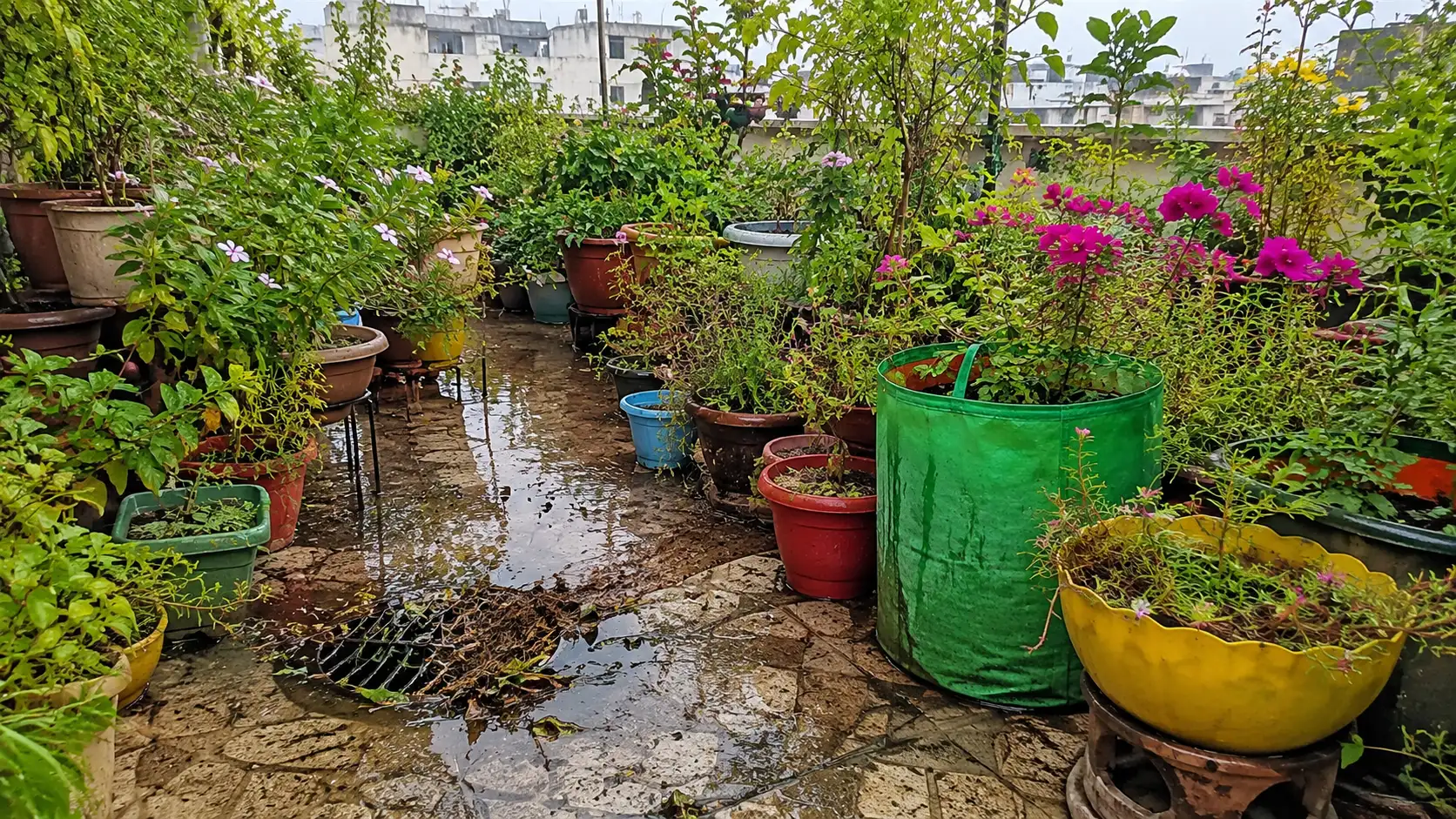
Mess comes not only from plants; poor water management can create muddy floors, algae, and unpleasant smells. Terrace gardens require proper drainage to avoid structural damage and messy puddles. Check drainage systems regularly and clear spaces between planters so leaf litter doesn’t block drains.
How to fix it:
- Ensure good drainage: Use pots with drainage holes and trays, but empty trays after watering. On terraces, place planters on stands to let water flow underneath.
- Install drainage layers: In large pots, add pebbles or broken terracotta at the bottom for better drainage. In raised beds, slope the soil slightly so water doesn’t pool.
- Regularly check gutters and pipes: During monsoons, clear downpipes and ensure there are no blockages.
- Protect surfaces: Use coir or wooden mats under pots to prevent staining and make cleaning easier.
Experience‑Based Expert Tips
- Prune little and often: In Indian balconies, frequent light trimming of money plants, ferns, and philodendrons keeps them lush without sudden shock.
- Avoid overcrowding pots: Give each plant enough breathing space. If your balcony feels cramped, move some plants to a friend’s garden or a stair landing temporarily.
- Choose quality potting mix: Rich, well‑drained soil not only keeps plants healthy but also reduces fallen leaves and soil spillage. Replenish compost twice a year
- Use vertical supports: For climbers on windy high‑rise balconies, secure trellises firmly and check them after storms.
- Clean during the cooler hours: Sweep and water early in the morning or late in the evening to avoid heat stress.
Frequently Asked Questions
Why does my garden look messy?
A garden looks messy when plants are overgrown, pots are randomly placed, weeds spread, and dry leaves collect on the floor. In Indian balconies, overcrowding and poor drainage are the most common causes.
How can I make my garden look neat quickly?
Remove dry leaves, weeds, broken pots, and unused items first. Then prune overgrown plants, group similar planters together, and keep one clear walking path for watering and cleaning.
How do I organise a small balcony garden?
Use vertical space with trellises, hanging planters and tiered plant stands. Keep large pots near walls, smaller plants in front, and balcony drains completely open.
Can too many plants make a garden look cluttered?
Yes. Too many plants reduce airflow, block pathways, and make maintenance difficult. From our experience, fewer healthy plants arranged properly look better than many crowded pots.
How often should I clean my balcony garden?
Do a quick clean every two or three days and a deeper clean once a week. During the monsoon, remove wet leaves and check drains more frequently.
How can I make a garden beautiful without buying more plants?
Prune existing plants, clean the pots, remove weak growth, and arrange plants by height. Repeating two or three planter colours can make the garden look more balanced.
Do plant stands make a garden look neat?
Yes. Plant stands create height, organise pots and make floor cleaning easier. They are especially useful for heavy ceramic or cement pots on Indian balconies and terraces.
Conclusion
A garden that looks cluttered can quickly sap the joy from tending your plants. Overgrown foliage, undefined edges, excessive decor, weeds, and mismatched plantings are the main reasons a garden looks messy.
By embracing regular pruning, clear borders, minimal decorations, diligent weeding and repetition, you can transform any balcony, terrace or yard into a serene oasis. Remember to manage drainage and clean up after monsoons. With consistent care and smart design, your garden will stay beautiful year‑round.
Join our WhatsApp channel to connect with fellow Indian plant lovers.


![15 Clever Trellis Ideas to Maximise Small Garden Space [Photos + DIY Tips]](https://www.urbanplant.in/a/blog/media/urban-plant-india.myshopify.com/Post/featured_img/Urban_Plant_Blog_Image_(6).webp)


