
.webp)
The rattlesnake plant is one of the most striking indoor foliage plants, with long, wavy leaves, dark green markings, and rich purple undersides. But its beauty comes with a challenge: those patterned leaves can quickly develop brown tips, curl, or turn yellow when growing conditions are unsuitable.
Successful rattlesnake plant care depends on four things: bright indirect light, consistently moist but well-drained soil, adequate humidity, and protection from extreme temperatures.
For Indian gardeners, seasonal changes make these requirements particularly important. Hot summers can dry the leaves, monsoon humidity can slow soil drying, and winter conditions can affect both watering and growth.
Fortunately, this plant does not need complicated treatments or constant attention. Understanding its natural growing conditions and learning to recognise early warning signs can make caring for it much easier.
Here is how to keep your rattlesnake plant healthy indoors throughout the year.
What Is a Rattlesnake Plant?
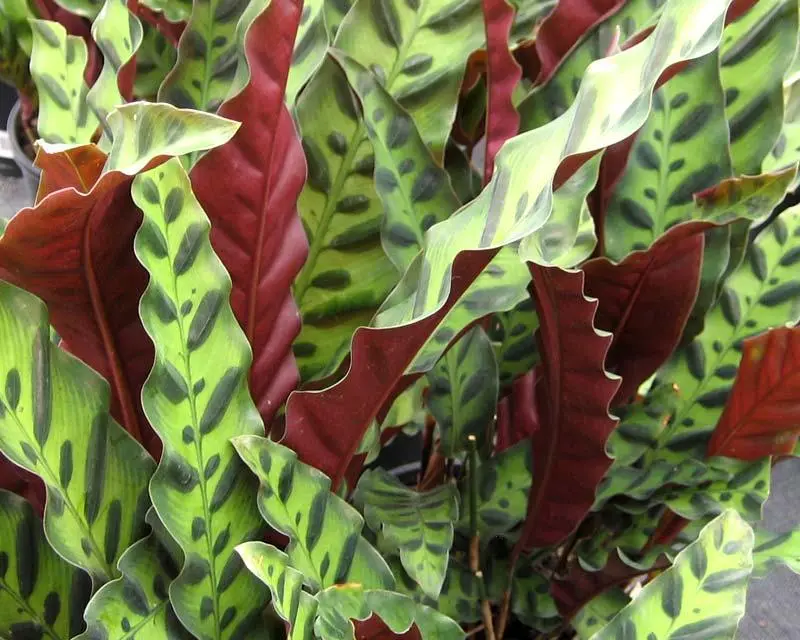
The rattlesnake plant, scientifically known as Goeppertia insignis, belongs to the Marantaceae family. It is also widely sold as Calathea lancifolia or rattlesnake calathea.
Native to the tropical forests of Brazil, this evergreen perennial is primarily grown for its distinctive foliage rather than its flowers. Its leaves feature elongated dark green markings on a lighter green surface, with purple undersides.
The Royal Botanic Gardens, Kew, recognises Goeppertia insignis as the accepted botanical name, while Calathea lancifolia is a synonym.
Like many members of the prayer plant family, its leaves may rise in the evening and lower during the day. This natural movement is called nyctinasty and should not be confused with stress-related leaf curling.
Rattlesnake Plant Care: Quick Reference
| Care Requirement | Recommended Conditions |
|---|---|
| Sunlight | Bright, indirect or filtered light |
| Watering | Water when the top 1–2 cm of soil begins to dry |
| Temperature | Ideally around 18–27°C |
| Humidity | Moderate to high; avoid persistently dry air |
| Soil | Moisture-retentive but free-draining potting mix |
| Fertiliser | Balanced houseplant fertiliser during active growth |
| Repotting | When roots become crowded |
| Propagation | Division of established clumps |
These are starting guidelines, not fixed rules. Adjust them according to your room temperature, pot size, humidity, and the plant's response.
1. Give Your Rattlesnake Plant Bright, Indirect Sunlight
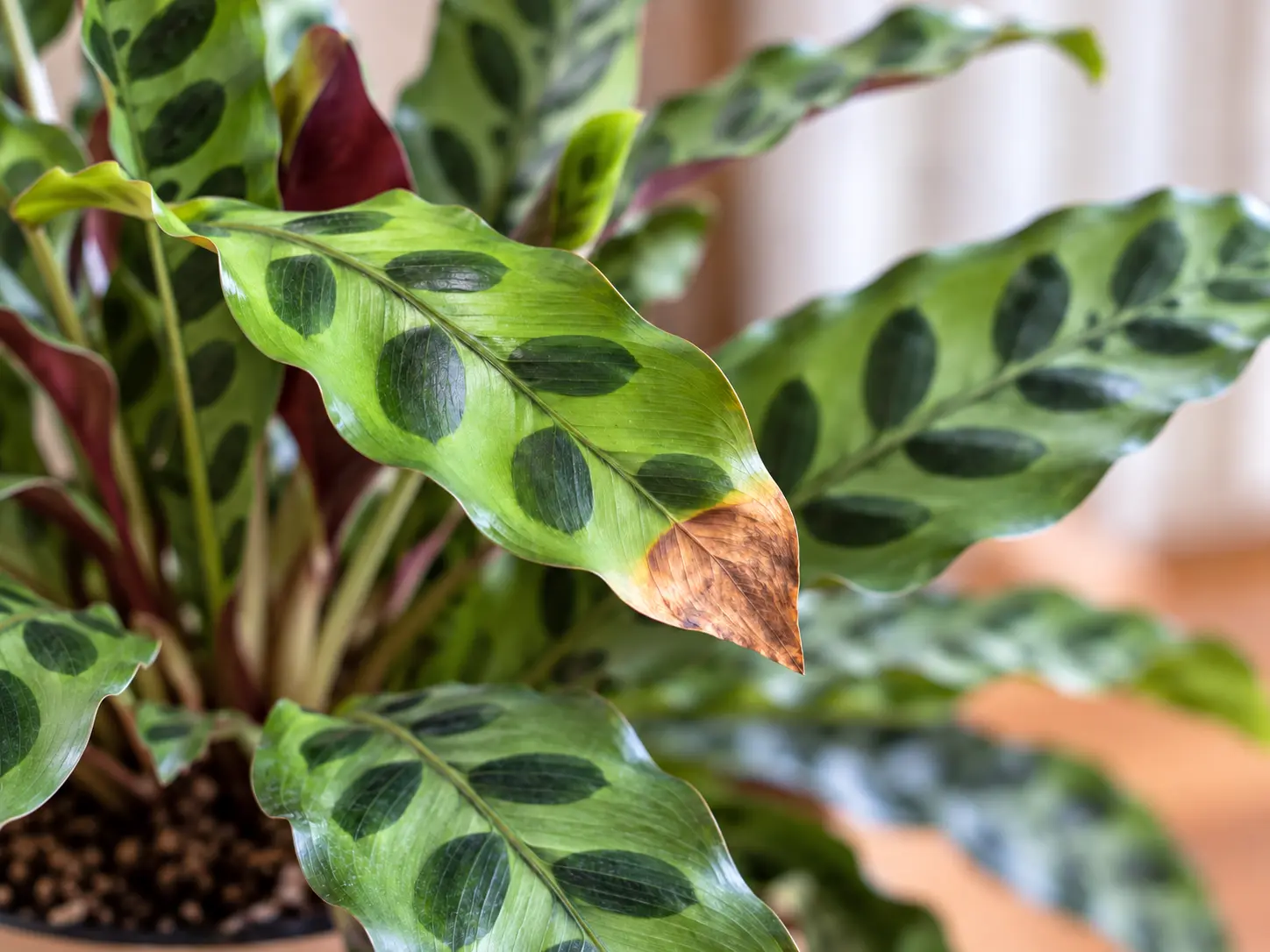
One of the most important aspects of rattlesnake plant sunlight requirements is understanding the difference between brightness and direct sun exposure.
This plant prefers well-lit surroundings without harsh sunlight falling directly on its leaves.
Where should you place it?
An east-facing window with gentle morning light is often suitable. A bright north-facing room can also work, provided sufficient daylight reaches the plant.
In rooms with strong afternoon sun, position it away from the glass or use a sheer curtain to filter the light.
Avoid placing it directly against west-facing windows during Indian summers. Strong afternoon sunlight passing through glass can damage delicate leaves.
Signs of excessive sunlight:
- Pale, faded, or bleached leaf patches
- Brown, dry areas on exposed leaves
- Leaves curling during the hottest part of the day
Signs of insufficient light:
- Slower production of new leaves
- Weak or elongated growth
- Persistently wet soil because of reduced water use
If your plant is struggling in a dark corner, move it gradually to a brighter location rather than suddenly exposing it to direct sunlight.
The Royal Horticultural Society also recommends bright, filtered light for calatheas.
2. Water Correctly Without Making the Soil Soggy
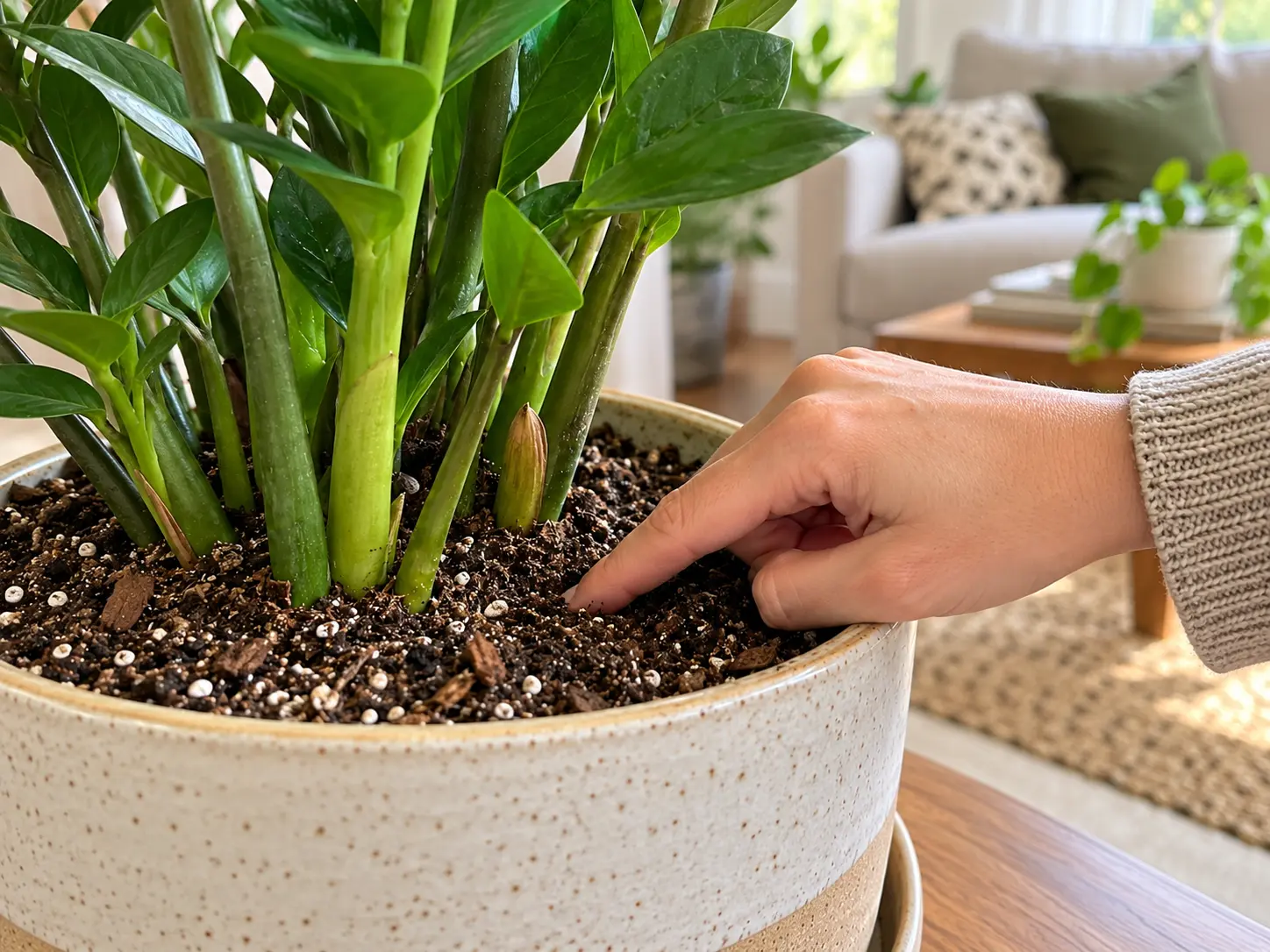
Rattlesnake plant watering is usually the most challenging part of indoor care.
Unlike drought-tolerant plants, rattlesnake plants do not appreciate having their entire root zone dry out repeatedly. However, permanently saturated soil can damage the roots.
The goal is consistently light moisture, not constant wetness.
How to check whether your plant needs water
Follow this simple method:
- Insert a finger approximately 1–2 cm into the potting mix.
- If the surface has begun to dry but the soil underneath remains slightly moist, check the pot's weight and overall condition before watering.
- If the upper layer feels dry and the pot is noticeably lighter, water thoroughly.
- Allow excess water to drain through the bottom.
- Empty any collected water from the saucer or decorative outer pot.
Avoid watering simply because three or four days have passed.
A small pot in a warm, ventilated room may dry much faster than a large pot in a cool, humid room.
What happens if you overwater?
Overwatering is not just about adding too much water at once. It is mainly about keeping the root zone excessively wet for too long.
Warning signs include yellowing lower leaves, persistent wilting despite wet soil, an unpleasant smell from the potting mix, and damaged roots.
If these symptoms appear, examine the drainage and root condition before adding more water.
3. Pay Attention to Water Quality
The water itself can sometimes contribute to leaf problems.
In areas with very hard tap water, dissolved minerals may gradually accumulate in the growing medium. Excessive mineral or fertiliser salts can interfere with water uptake and contribute to brown leaf margins.
If your tap water is particularly hard, consider using clean rainwater or suitable low-mineral water, such as properly maintained RO-filtered water.
Leaving tap water standing may reduce free chlorine where present, but it does not remove dissolved hardness minerals.
You do not need to change your water source automatically. First assess humidity, soil moisture, drainage, and fertiliser use, because brown tips can have several causes.
4. Maintain Humidity for Healthier Leaves
Rattlesnake plants originate from humid tropical environments. Consequently, extremely dry indoor air can cause their delicate leaf edges to deteriorate.
This is especially relevant in Indian homes during dry summers, North Indian winters, and prolonged air-conditioner use.
Practical ways to increase humidity
- Group compatible indoor plants: This can create a slightly more humid microclimate.
- Use a room humidifier: Particularly helpful when indoor air is persistently dry.
- Try a pebble tray: Keep water below the top of the pebbles so the pot never sits directly in water.
- Choose a naturally humid room: A bright, ventilated bathroom may be suitable if enough indirect light is available.
Occasional misting can temporarily wet leaves, but it is not a reliable substitute for maintaining room humidity. Avoid leaving foliage continuously wet in poorly ventilated spaces.
Higher humidity is helpful only when accompanied by appropriate watering and air circulation.
5. Protect the Plant From Temperature Extremes
A comfortable, stable indoor temperature is preferable to repeated exposure to intense heat or cold.
Aim for approximately 18–27°C where practical, and protect the plant from sustained temperatures below about 16°C.
Avoid placing it beside:
- Air-conditioner vents blowing directly onto the leaves
- Room heaters
- Frequently opened doors admitting cold winter air
- Sun-heated balcony glass during summer
Sudden temperature changes may cause stress even when watering is adequate.
In cities such as Delhi, Jaipur, and Lucknow, moving the plant away from exposed windows during peak summer afternoons can be particularly helpful.
6. Choose the Right Soil Mix and Pot
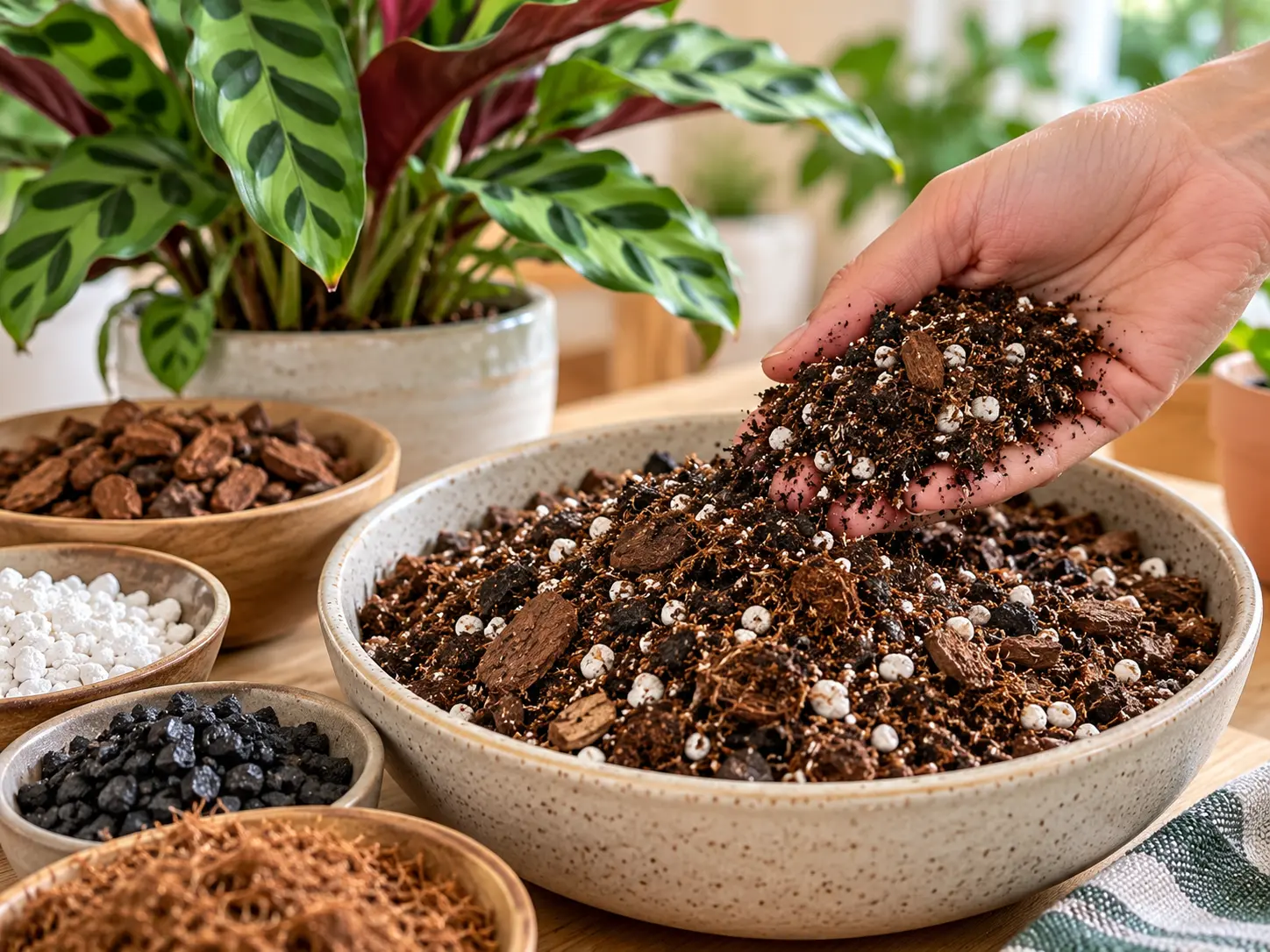
The ideal rattlesnake plant soil mix must hold sufficient moisture while allowing excess water to escape.
Ordinary compact garden soil can become problematic in indoor containers because it may retain too much water and restrict airflow around the roots.
A practical starting combination is a good-quality, peat-free indoor potting mix containing cocopeat or coco coir, composted organic material, and a drainage-supporting component such as perlite or fine composted bark.
The exact proportions should depend on how quickly the mixture drains.
After watering, the medium should feel moist rather than muddy or tightly compacted.
Choosing a suitable planter
Always prioritise a container with functional drainage holes.
A decorative planter is perfectly acceptable, but if it has no drainage, keep the plant in a separate inner nursery pot and remove accumulated water after each watering.
Urban Plant offers a range of indoor plants for gardeners developing their indoor collection. Match each plant's pot and growing medium to its individual moisture requirements.
7. Fertilise Moderately During Active Growth
Rattlesnake plants need nutrients, but excessive fertiliser can be more damaging than slightly slow growth.
Use a balanced fertiliser labelled for indoor foliage plants, following the manufacturer's directions.
During active growth, feeding approximately once a month may be appropriate. Reduce or pause feeding when growth slows, particularly in cooler months or poorly lit rooms.
Avoid fertilising a plant that is severely wilted, suffering from root problems, or recently stressed by repotting.
More fertiliser does not automatically produce larger, greener leaves. Excess salts can injure roots and worsen leaf-tip browning.
8. Why Are Your Rattlesnake Plant Leaves Curling or Turning Brown?
Leaf problems are easier to solve when you examine both the symptoms and the growing conditions.
| Visible Symptom | Possible Cause | What to Check First |
|---|---|---|
| Brown, crispy leaf tips | Dry air, mineral buildup, inconsistent watering | Humidity, water source, soil moisture |
| Leaves curling throughout the day | Water stress, excessive heat, low humidity | Soil and room conditions |
| Yellowing lower leaves | Excess moisture, root stress, natural ageing | Drainage and root health |
| Bleached or scorched patches | Strong sunlight | Direct sun exposure |
| Drooping leaves with wet soil | Possible root damage | Root condition and drainage |
| Fine webbing and pale speckles | Spider mites | Leaf undersides |
These are diagnostic clues, not definitive diagnoses. Several stresses can produce similar symptoms.
How to fix brown tips
Start by correcting the likely environmental cause rather than cutting away every affected leaf.
Check for dry air, repeated drought, excessive fertiliser, and mineral deposits. If the plant has healthy new growth after these adjustments, the care changes are likely helping.
Existing brown tissue will not turn green again.
How to fix curling leaves
First observe when curling occurs.
Evening leaf movement is normal. Curling that persists during the day, especially with dry potting mix, may indicate insufficient moisture or excessive heat.
If the leaves curl while the soil remains wet, do not automatically add water. Examine the roots and environmental conditions instead.
9. Watch for Common Indoor Pests
Spider mites and mealybugs can occasionally affect rattlesnake plants.
Inspect the undersides of leaves, along the midrib, and where leaves emerge from the base.
Spider mites may cause fine speckling and webbing. Mealybugs often appear as small, cotton-like clusters.
If you notice an infestation:
- Isolate the affected plant from nearby houseplants.
- Inspect the entire plant carefully.
- Remove visible pests gently where possible.
- Use a suitable, labelled indoor-plant treatment only when necessary, following its instructions.
- Recheck the plant regularly because additional treatment may be needed.
Avoid applying concentrated neem oil, detergent mixtures, or unverified household remedies to sensitive foliage.
10. Adjust Rattlesnake Plant Care for Indian Seasons
A watering or placement routine that works in April may be unsuitable in August or December.
Rattlesnake Plant Care for Different Indian Seasons
| Season or Climate | Main Concern | Recommended Adjustment |
|---|---|---|
| Hot, dry summer | Heat and low humidity | Filter strong sunlight and monitor moisture more frequently |
| Monsoon | Slower soil drying and high moisture | Check drainage; do not water by a fixed schedule |
| North Indian winter | Cold exposure and dry indoor air | Protect from cold windows and reduce watering as needed |
| Humid coastal climate | Persistent moisture | Maintain ventilation and avoid saturated soil |
| Air-conditioned rooms | Dry airflow and temperature changes | Move away from AC vents and monitor leaf edges |
Indian climate varies considerably by location and season. The India Meteorological Department documents significant regional differences in temperature and seasonal weather patterns, reinforcing why plant care should respond to local conditions rather than a single national watering schedule.
11. Simple Weekly Rattlesnake Plant Care Checklist
- A short weekly inspection can prevent many common problems.
- Check soil moisture before watering.
- Observe the leaves for curling, yellowing, or crispy edges.
- Inspect leaf undersides for pests.
- Check that drainage holes are not blocked.
- Remove standing water from decorative containers.
- Wipe dusty leaves gently with a clean, damp cloth.
Review whether seasonal light or temperature changes require repositioning.
The most useful habit is observing changes over time. New, healthy leaves and a stable root zone are better indicators of progress than trying to maintain perfectly unblemished older foliage.
Frequently Asked Questions
How do you care for a rattlesnake plant indoors?
Keep your rattlesnake plant in bright, indirect sunlight at 18–27°C. Maintain slightly moist, well-drained soil, adequate humidity, and protection from extreme temperatures.
How often should I water my rattlesnake plant?
Water when the top 1–2 cm of soil begins to dry. Check moisture regularly, as Indian summers may require more frequent watering than monsoon or winter.
Does a rattlesnake plant need direct sunlight?
No. Rattlesnake plants prefer bright, indirect sunlight. Harsh afternoon sun can scorch their patterned leaves, making filtered light near an east-facing window ideal.
Why are my rattlesnake plant leaves turning brown?
Brown leaf tips usually indicate low humidity, inconsistent watering, excess fertiliser, or mineral buildup. Check soil moisture and water quality before adjusting your care routine.
Why are my rattlesnake plant leaves curling?
Rattlesnake plant leaves may curl due to underwatering, dry air, excessive heat, or root stress. Check soil moisture first. Natural evening leaf movement is normal.
Grow a Healthier Indoor Garden With Urban Plant
Enjoy learning how to keep indoor plants healthy in Indian growing conditions.
Stay connected with Urban Plant for practical plant-care advice, seasonal gardening guidance, troubleshooting tips, and ideas to make the most of your indoor and outdoor spaces.
Join the Urban Plant WhatsApp Channel for useful gardening updates, seasonal reminders, and new guides.


-2.webp)
