
.webp)
Have you ever eaten a juicy pineapple and wondered if you could grow another from its spiky top? Many home gardeners assume pineapple plants are too exotic for Indian balconies or terraces, yet they are surprisingly easy to propagate. By re‑growing the crown, you not only reduce waste but also add a tropical touch to your home.
The hot Indian summers and humid monsoons actually mimic the pineapple’s natural tropical habitat, making our climate suitable for this bromeliad. As long as you use a well‑draining pot, provide plenty of sunlight, and resist the urge to over‑water, you can enjoy the satisfaction of nurturing a pineapple plant from kitchen scrap to fruiting beauty. This guide shows you how.
1. Choose a Ripe Pineapple and Gather Supplies
.webp)
Selecting the right fruit
Your success begins with a ripe, healthy pineapple. At the store or market:
- Check fragrance: A ripe pineapple smells sweet and fruity near the base; avoid fruit that smells vinegary.
- Press the base: A slight give at the bottom and a heady aroma indicate ripeness.
- Healthy crown: Ensure the green leafy top is firm and free from mould or rot; this will become your new plant.
Supplies you will need
- A sharp knife for cutting the crown.
- A glass jar or small bowl for water rooting.
- A 15–20 cm (6–8 inch) pot with drainage holes.
- Well‑draining soil – a mix of 50 % potting soil and 50 % cactus mix or coco‑peat works well.
- Balanced liquid fertilizer (10‑10‑10 or 14‑14‑14) for later feeding.
- A spray bottle for misting (optional but beneficial).
You May Also Like
Tomato Growing Tips: The Hidden June Mistake That Silently Reduces Your Harvest
2. Prepare the Pineapple Crown
.webp)
Removing and cleaning the crown
- Cut or twist off the top: Slice about 2 cm below the leaves to include a small portion of the fruit. Alternatively, grip the fruit and twist to remove the crown. Use a clean knife to avoid introducing bacteria.
- Peel away lower leaves: Remove a few rows of small leaves at the base until 2–3 cm of stem is exposed. This is where roots will form.
- Let it dry: Place the crown in a well‑ventilated spot for 2–3 days. Allowing the cut to heal (or callus) reduces rotting. In humid areas, a fan or open window helps.
Indian gardening tip
In our humid monsoon climate, rot can set in quickly. Dry the crown in a shaded, airy space and avoid placing it under direct sunlight, which can scorch the leaves. If you live in an apartment, leaving it near a balcony door with good airflow is ideal.
3. Rooting the Pineapple Top
.webp)
You can start the crown in water or directly in soil. Both methods work; choose the one that suits your space and patience level.
Water rooting method (Beginner‑friendly)
- Insert in water: Submerge the exposed stem in a narrow glass or jar so that the leaves stay above water. If necessary, use toothpicks around the crown to prop it up.
- Change water frequently: Replace the water every few days to keep it fresh.
- Place in bright light: Keep the jar on a bright windowsill or balcony. Morning sunlight is ideal; avoid strong afternoon sun to prevent leaf burn. Roots usually appear in 2–3 weeks.
Soil rooting method
- Prepare a well‑draining mix: Use cactus soil or a mix of potting soil, coco‑peat, and coarse sand. Pineapples dislike waterlogged soil. Pineapples dislike waterlogged soil
- Plant the crown: Bury the stem so that about an inch of it is below the surface. Firm the soil gently around the base.
- Water lightly: Moisten the soil just enough to settle it. Over‑watering at this stage can cause rot.
4. Transplanting and Potting Up
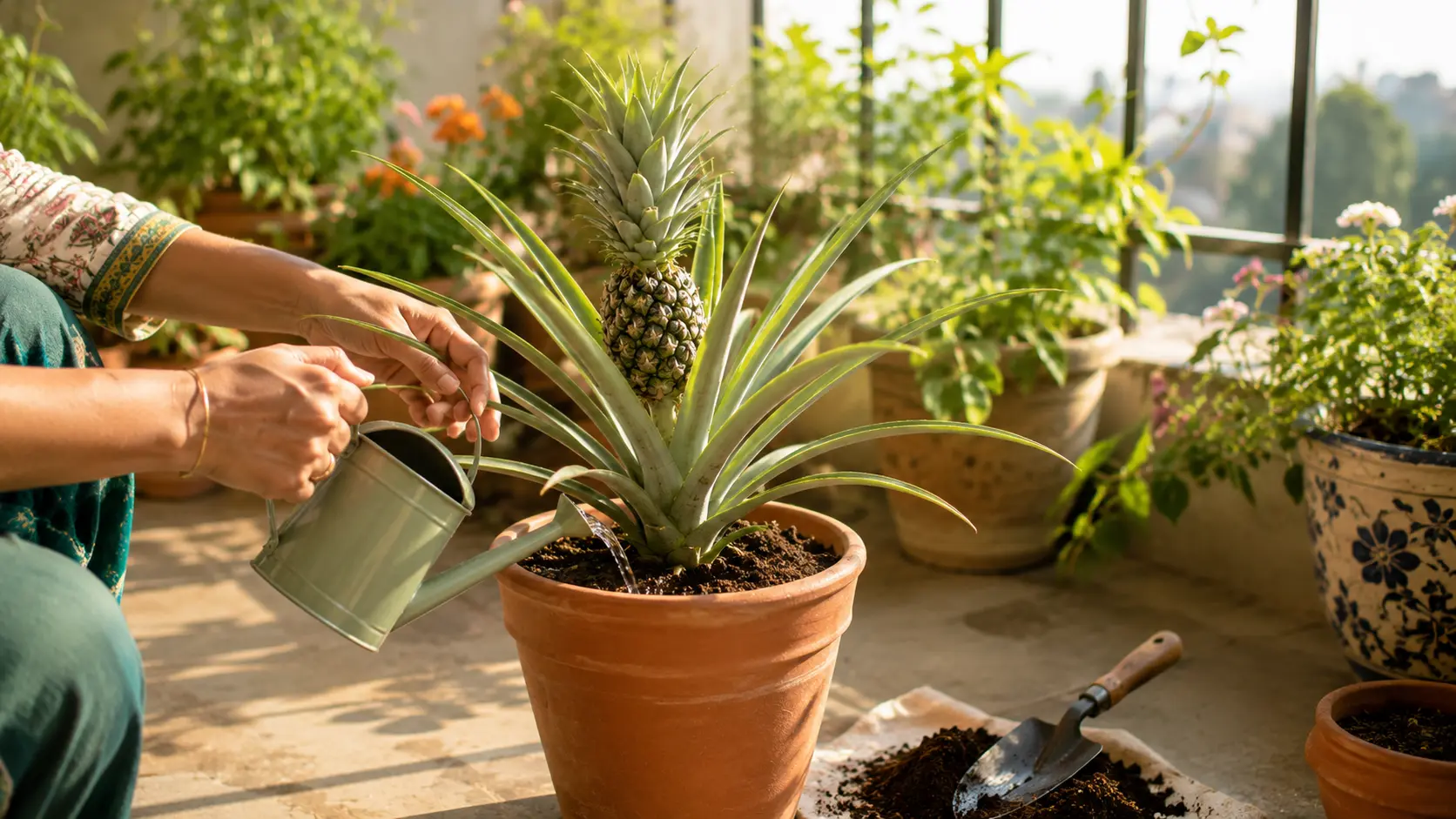
Once roots reach 5–8 cm (about 2–3 inches) long or the plant tugs firmly in the soil, it’s time to pot up.
- Select the pot: Begin with a 15–20 cm (6–8 inch) pot with drainage holes. As the plant grows, transfer it to a 25 cm (10-inch) pot within a year.
- Prepare the soil: Mix equal parts regular potting soil and cactus mix, or use orchid bark mixed with soil for extra aeration.
- Plant the crown: Place the rooted crown in the centre, fill around it with soil, and press gently to secure it. Leave about 2 cm space below the rim for watering.
- Water thoroughly: Water until liquid drains out the bottom, then empty the saucer. Allow the top inch of soil to dry before watering again. In summer, this may mean watering 2–3 times per week; in winter, once every 7–14 days.
Choosing a location
Pineapple plants love at least 6–8 hours of bright light daily. On an Indian balcony or terrace:
- Morning sun: East‑facing balconies provide gentle light that encourages strong growth without scorching leaves.
- Partial shade in peak summer: In regions where temperatures exceed 35 °C, shade the plant during afternoon hours to prevent leaf burn.
- Indoor placement: Near a sunny window works if outdoors is not possible. Avoid cold drafts during winter and keep the room temperature above 18 °C.
5. Caring for Your Pineapple Plant
Watering
Soil moisture: Water when the top inch of soil is dry. Over‑watering leads to root rot.
Summer vs. winter: In hot months (April–June), watering may be needed 2–3 times per week. In cooler months (December–February), reduce frequency.
Water the rosette: Pineapple plants form a central cup; add a tablespoon or two of water into this vase occasionally.
Feeding
Feed with a balanced liquid fertilizer (10‑10‑10 or 14‑14‑14) every 4–6 weeks during the growing season. In late autumn and winter, feed every 6 weeks or at half strength. Avoid over‑fertilising, as excess salts can burn roots
Temperature
Pineapples thrive between 18 °C and 35 °C. Temperatures below 15 °C slow growth, and frost can kill the plant. In northern India, move the plant indoors or to a greenhouse during cold spells. A slight difference between day and night temperatures encourages healthy growth.
Encouraging fruiting
Pineapple plants usually flower and fruit after 18–24 months under good conditions. To induce flowering if it delays beyond three years, enclose the plant in a clear plastic bag with a ripe apple for a few days. The apple releases ethylene gas, which stimulates blooming.
6. Common Mistakes to Avoid
- Over‑watering: The most common cause of failure. Always let the topsoil dry before watering.
- Poor drainage: Avoid heavy clay soils or pots without drainage holes. Pineapples despise waterlogged conditions.
- Direct harsh sun: Indian summer afternoons can scorch leaves; provide shade during peak heat.
- Planting too deeply: Burying the crown too deeply increases rotting risk.
- Ignoring humidity: Dry indoor air causes leaf tips to brown. Use pebble trays or misting.
7. Experience‑Based Expert Tips
At Urban Plant, we’ve helped thousands of gardeners nurture pineapple plants on balconies and terraces. Here are some practical insights:
- In Indian balconies, monsoon rains can drown pots left outdoors. Always move potted pineapples under a covered area or use plant stands that raise them off the floor. Our metal stands allow drainage and prevent messy floors.
- For terrace gardens, strong winds can topple heavy pineapple plants. Choose a heavy, wide‑based pot and use a U‑hook or railing clamp to secure it.
- High‑rise apartments often receive less light due to neighbouring buildings. Supplement natural light with two 40‑watt grow lamps or fluorescent tubes
- A summer heatwave (over 40 °C) can stress the plant. Increase watering slightly but avoid soggy soil, and provide afternoon shade. A light misting in the evening helps reduce leaf stress.
- Patience is key: It may take up to two years to see fruit. Enjoy the decorative plant, and treat the fruit as a bonus!
FAQ
How long does pineapple take to grow at home?
A pineapple plant usually takes 18 to 24 months to produce fruit at home. Sometimes it may take up to 3 years. In Indian balconies, growth depends mainly on sunlight, warm weather, pot size, and correct watering.
Can pineapple grow in the Indian climate?
Yes, pineapple can grow well in the Indian climate because it loves warmth, humidity, and sunlight. It grows best in sunny balconies, terraces, and open corners. During peak summer, protect it from harsh afternoon heat to avoid leaf burn.
Can I grow pineapple on a balcony?
Yes, pineapple can grow in a balcony if it gets 6–8 hours of bright light and good airflow. East-facing or south-facing balconies are best. In high-rise apartments, avoid dark corners because low light can slow growth and delay fruiting.
What is the best soil for a pineapple plant?
The best soil for pineapple is loose, airy, and well-draining. Use garden soil mixed with cocopeat, compost, and sand or perlite. Avoid heavy clay soil because it holds too much water and can cause crown rot or root rot.
How often should I water a pineapple plant?
Water the pineapple only when the top 1–2 inches of soil feel dry. In Indian summers, watering may be needed 2–3 times a week. In winter or monsoon, there is less. Overwatering is the most common reason pineapple plants die in pots.
Does pineapple need full sunlight?
Pineapple needs bright sunlight for healthy growth, ideally 6–8 hours daily. Morning sunlight is best for Indian homes. In very hot cities, give partial shade during harsh afternoon hours, especially on open terraces.
Why is my pineapple crown rotting?
A pineapple crown rots mainly due to overwatering, poor drainage, or planting before the cut base dries. Always dry the crown for 2–3 days before planting. Use a pot with drainage holes and never keep the soil soggy.
Wrapup
Growing a pineapple at home from its leafy top is a rewarding journey. By selecting a ripe fruit, preparing the crown properly, rooting it carefully and providing the right balance of light, water and warmth, you can transform kitchen waste into a thriving tropical houseplant.
Remember that pineapples appreciate bright light, well‑draining soil and patience; in return, they bring a touch of the tropics to your balcony or terrace.
Follow our official WhatsApp Channel for more plant tips and exciting deals.


