
-3.webp)
Have you ever dreamt of plucking your own sweet black grapes from a pot on your balcony? Many Indian urban gardeners hesitate because they assume grapes need a large vineyard. In truth, black grape vines can flourish in a well‑chosen container.
Whether you live in a high‑rise apartment in Delhi or have a small terrace in Chennai, you can grow grape vines if you provide them with sun, space and a little care.
The key challenges are choosing the right variety, providing strong support, managing water during harsh summers and heavy monsoon rains, and keeping fungal diseases away. This guide breaks down each step in simple language so even a class 8 student can follow along.
1. Choosing the Right Black Grape Variety
.webp)
Not all grapes are equal. For home gardens, look for seedless table varieties that are sweet and disease‑resistant. The National Horticulture Board lists Sharad Seedless as a black, crisp, and very sweet variety grown mainly for table purposes.
Another option is Arka Shyam, a cross between Bangalore Blue and Black Champa that produces medium‑large shiny black berries and is resistant to anthracnose.
For a seedless option with crisp pulp, consider Arka Neel Mani. These varieties are suitable for pots because they produce compact clusters and have good shelf life.
1 a) When to Plant
.webp)
Black grapes grow best when planted during the cooler months. In most parts of India, grape vines are planted between November and March. Temperatures should be between 15 °C and 40 °C; growth slows below 10 °C.
The vines need a hot, dry period of three to four months for fruit development, so plan your planting around the end of winter to avoid the peak monsoon.
1 b) Site Selection and Sunlight
.webp)
Grapes love sunlight. Place your pot where the plant receives at least six hours of direct sun per day. Full sun is essential for sugar development and flavour. Choose a spot with good air circulation because grape vines have large leaves and can be prone to fungal diseases; slopes or positions parallel to prevailing winds help. On balconies, a south‑ or west‑facing wall works well. In high‑rise apartments, ensure the pot is sheltered from strong winds.
2. Preparing the Pot
.webp)
2 a) Container Size and Material
For healthy roots and stable growth, you need a large container. A 50–60-litre pot that is 16–18 inches deep and 18–24 inches wide is ideal. Avoid dark‑coloured pots because they absorb and hold too much heat; wooden or light‑coloured containers keep roots cool. Ensure the pot has several drainage holes. Heavy ceramic or cement pots can work but are difficult to move; pair them with a sturdy metal plant stand from Urban Plant to keep the pot elevated and make cleaning easier.
2 b) Soil Mix
Grapes prefer well‑draining sandy or loamy soil with a slightly acidic to neutral pH. The Arbor Day Foundation recommends a pH of 5.0–6.5, while Indian cultivation guides suggest 6.5–7.5.
You can achieve this by mixing equal parts of garden soil, coarse sand, and compost. Avoid very fertile or clay soils because overly rich soils promote excess vegetative growth and reduced fruiting. For improved nutrition, add a handful of bone meal or well‑rotted manure. Urban Plant’s organic potting mixes and plant care products are excellent options.
2 c) Drainage and Root Preparation
Place small stones or broken terracotta pieces over the drainage holes to prevent soil loss. Fill the pot halfway with the soil mix. Remove the grape plant from its nursery bag and gently fan out the roots so they don’t circle and girdle the plant.
Position the plant so the crown sits at the same depth as it grew previously and fill the pot with soil. Water thoroughly until water runs out of the drainage holes.
2 d) Planting and Training Your Grapevine
After placing the vine, choose the strongest cane (or two if you want a double trunk) and prune off the rest. Cut the selected cane back, leaving only two or three buds.
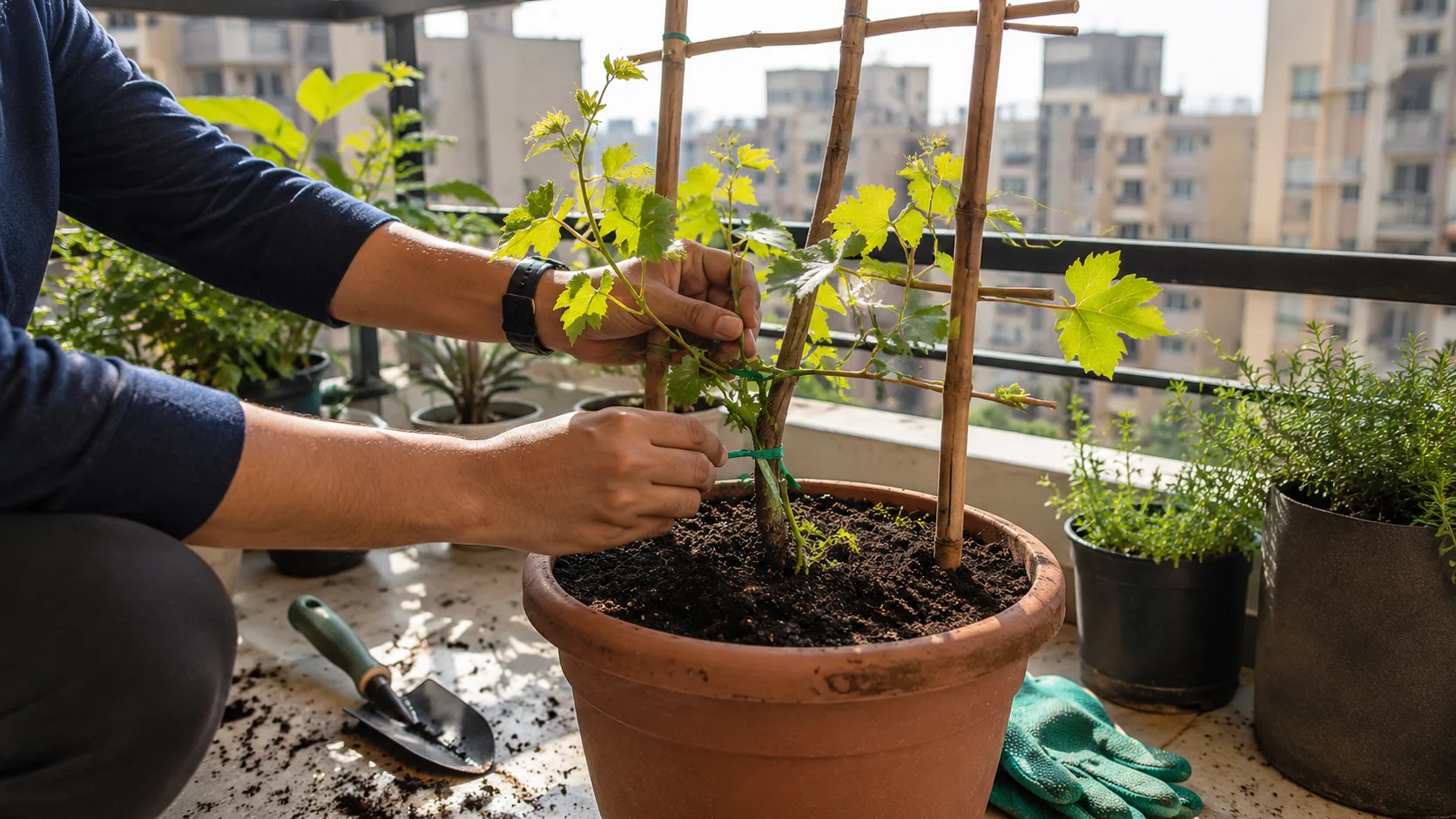
These buds will sprout new shoots and form the future framework of your vine. Tie the cane to a four‑foot stake or trellis using soft ties; grapes are vigorous climbers and need strong support. On balconies and terraces, attach the trellis to a railing or wall. Avoid flimsy bamboo stakes; Urban Plant’s metal trellises and wall‑mounted plant stands provide sturdy support.
2 e) Watering
Newly planted vines require deep watering once a week. The expert suggests watering thoroughly at least once per week during the first growing season. Vines need about 2.5 cm (1 inch) of water per week during establishment. Once established, the vines seldom need watering.
In Indian summers, check soil moisture every few days; water deeply when the top few centimetres of soil are dry. Avoid overhead watering; direct water at the base to prevent fungal diseases. Use a layer of mulch (pine bark, compost, or pebbles) on the soil surface to retain moisture and regulate temperature
2 f) Fertilizing
Grapes do not need heavy fertilisation. An expert warns that overly fertile soil leads to excessive vegetative growth and poor fruiting. Fertilise only when vines appear weak. In the second year, apply a small amount of balanced fertilizer, such as 10‑10‑10, about two to three weeks after new growth starts.
Avoid applying fertilizer right next to the stem; sprinkle it 30 cm away around the drip line. Indian farmers often use farmyard manure, neem cake, and biofertilisers; you can incorporate a handful of compost or vermicompost every spring. Urban Plant’s organic plant food provides slow-release nutrition ideal for potted vines.
3. Pruning and Ongoing Care
3 a) Pruning Schedule
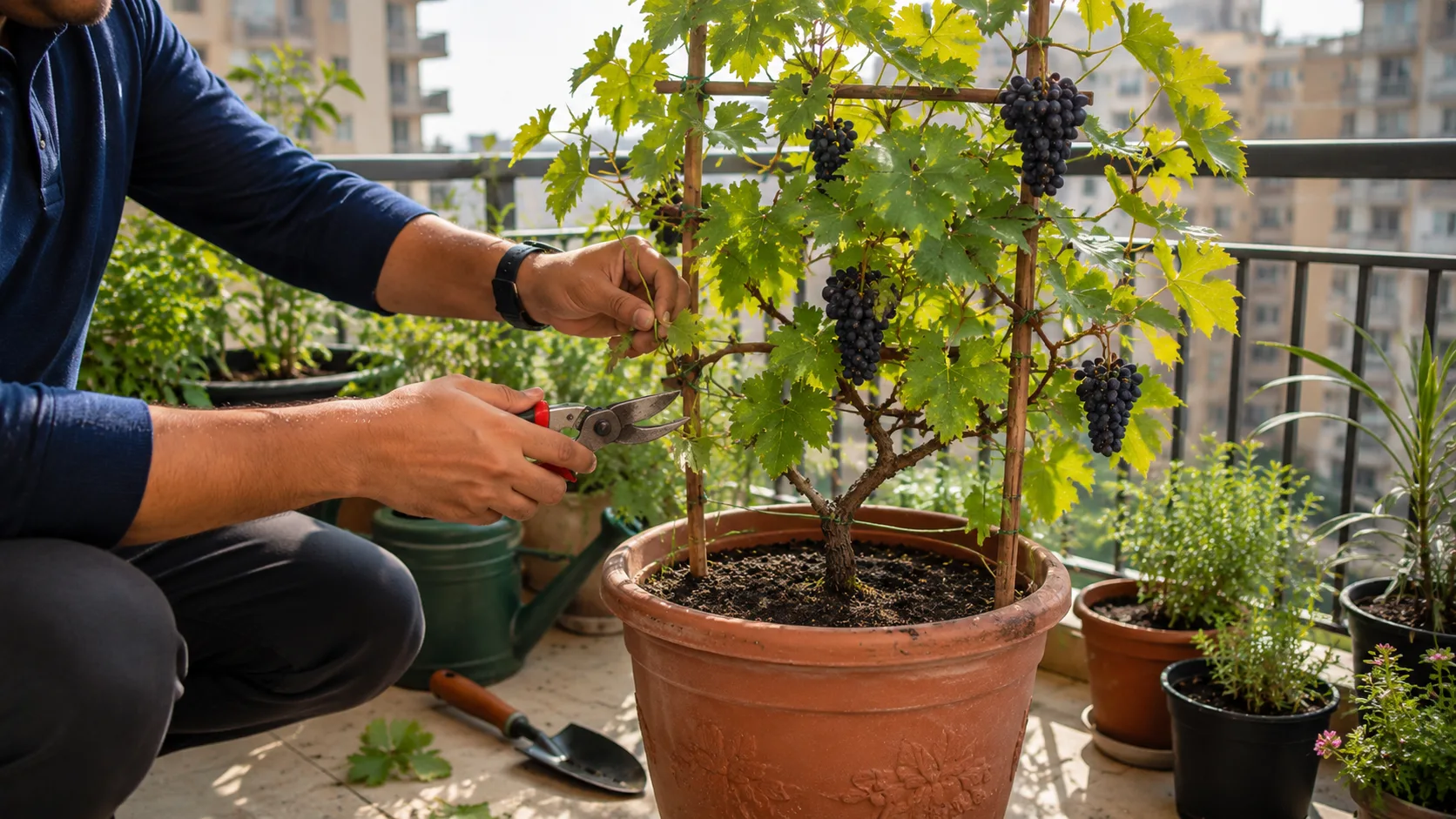
Do not prune your vine in the first year. The goal is to develop a strong root system and trunk. In the second year, prune the old wood at the plant’s base in late winter or early spring.
Grape vines are usually pruned when dormant (January–February in most Indian regions), and 70–90 % of the new growth is removed on a mature vine. Leave two or three buds on each spur and remove weak or immature canes. Pruning ensures balanced growth, good air circulation and abundant fruiting.
3 b) Training and Support
Grape vines become heavy, so provide substantial support. Planters Place emphasises that supports must withstand the weight of the vines and that the main trunk should be trained vertically while leaders run horizontally.
On balconies, use wall brackets or ceiling hooks to anchor your trellis; on terraces, install a sturdy T‑trellis or pergola. As the vine grows, tie new shoots loosely to the support. Remove tangled or crossing shoots to maintain airflow.
4. Sunlight and Air Circulation
Full sun is essential for sweet fruit. According to Planters Place, grapes need full sun and moist, well‑draining soil. Thin out excess leaves to allow sunlight to reach the clusters and prevent fungal diseases.
On terraces prone to intense sunlight, consider using shade cloth during the hottest afternoon hours to prevent sunburn. If you live in regions with heavy monsoon rains, ensure the trellis is slightly slanted so rainwater drains off quickly and does not stagnate.
4 a) Pest and Disease Management
Common grape diseases include downy mildew, powdery mildew, and black spot. An expert warns that fungal diseases can develop in warm, dry weather and emphasises mulching and thinning the canopy to improve air circulation.
Slurrp advises monitoring for aphids and fungal diseases like black spots and powdery mildew and treating them promptly. Keep your vine clean: remove fallen leaves and pruned material to prevent overwintering pests. Homemade sprays such as neem oil or baking soda solutions can control mild fungal infections.
5. Harvesting and Enjoying Your Grapes
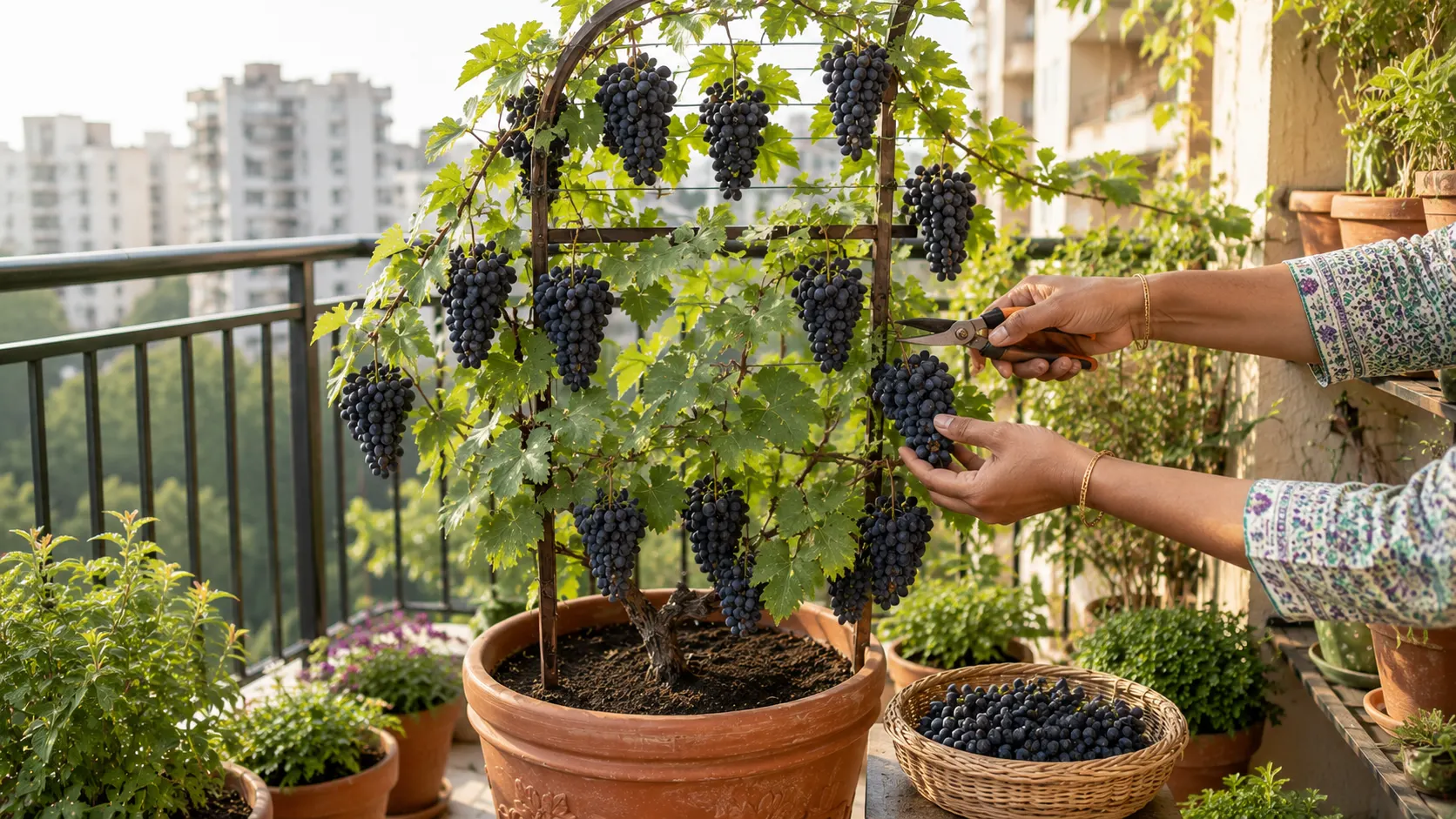
Your black grape vine will begin fruiting in its second or third year. Grapes are usually ready for harvest in India between March and April. Grapes change colour several weeks before they reach maximum sweetness; the Arbor Day Foundation advises letting the clusters hang until the cluster stems turn brown and woody, and the seeds turn from green to brown.
Taste a grape to check sweetness. Harvest on a dry morning because wet grapes do not store well. Use scissors to cut whole clusters, leaving a short stem handle, and handle them gently to avoid rubbing off the protective bloom. Freshly picked grapes keep in the refrigerator for up to a week; for longer enjoyment, try making grape jam or raisins.
Experience‑Based Tips
- Avoid plastic supports: From our experience with Indian balcony gardens, many beginners use weak bamboo sticks or plastic stakes. These break under the weight of a mature vine. A strong metal trellis from Urban Plant will keep the plant secure and prevent accidents.
- Raise pots off the floor: During the monsoon, water can accumulate under heavy pots, causing root rot. Use Urban Plant’s sturdy plant stands or pot elevators to lift the container, improve drainage and make sweeping easier.
- Protect against high winds: In high‑rise apartments, the vine can act like a sail. Anchor the trellis to a wall or railing and use ties that can flex without cutting into the stem.
- Don’t overwater during ripening: Excess water, when fruit starts to ripen, can cause berries to burst and rot. Indian summers are hot, but once the clusters form, reduce watering and let the soil dry slightly between waterings.
- Shake the plant during flowering: Grapevines are generally self‑fertile, but gently shaking the plant during flowering improves pollination and yield.
Frequently Asked Questions
Can I grow black grapes at home in India?
Yes, you can grow black grapes at home in India in a sunny balcony, terrace, or garden. Use a large pot, a strong trellis, well-draining soil, and give 6–8 hours of sunlight.
What is the best pot size for black grapes?
Use an 18–24-inch-wide and deep pot or a 50–60-litre container. From our gardening experience, small pots dry quickly and reduce root growth.
Can black grapes grow in pots?
Yes, black grapes grow well in pots when the container is large, has drainage holes, and the vine gets full sunlight. Strong support is needed for healthy growth.
How much sunlight does a black grape plant need?
A black grape plant needs 6–8 hours of direct sunlight daily. Without proper sunlight, the vine may grow leaves but produce very few or sour grapes.
Which soil is best for black grape plant care?
Use loose, well-draining soil mixed with compost, sand, and cocopeat. In the Indian monsoon, heavy clay soil can hold excess water and damage grape roots.
How often should I water black grapes in pots?
Water only when the top 2–3 inches of soil feel dry. Avoid daily watering because overwatering is one of the most common mistakes in Indian balcony gardens.
Conclusion
Growing black grapes at home is not only possible—it’s a rewarding way to bring fresh fruit into your urban lifestyle. Choose a suitable seedless variety, provide a large pot with well‑draining soil and full sun, and support the vine properly. Water deeply but infrequently, prune during dormancy, and watch out for pests. By following this guide, you can master grapevine care in India and enjoy sweet, dark clusters right from your balcony or terrace.
Follow our WhatsApp channel for more exciting offers and gardening tips.


