
.webp)
Not every beautiful indoor plant needs soil to grow. Some plants grow happily in clean water, while some absorb moisture and nutrients from the air or bark. That is why non-soil indoor plants are becoming a smart choice for Indian homes, especially for people who want greenery without soil mess, heavy pots, floor stains, or regular repotting.
For small apartments, balcony corners, work desks, kitchen windows, and modern living rooms, these plants are simple, stylish, and easy to maintain. From our gardening experience at Urban Plant, we have seen that beginners love soil-free plants because they can clearly see the roots, change water easily, and decorate their space without worrying about dirty floors.
So, if you want a cleaner and more modern way to bring greenery into your home, here are 7 indoor plants that can grow without soil and still look fresh, healthy, and beautiful.
What is hydroculture?
Hydroculture, often referred to as hydroponics, is a technique where plants are grown with their roots partially submerged in a nutrient solution instead of soil.
Hydroponics (water culture) is one of four soilless methods where plants are held upright above a tank, and their roots sit in a nutrient solution. Soil normally provides support, water, and nutrients, but water culture substitutes the soil with a carefully maintained solution
1. Money Plant
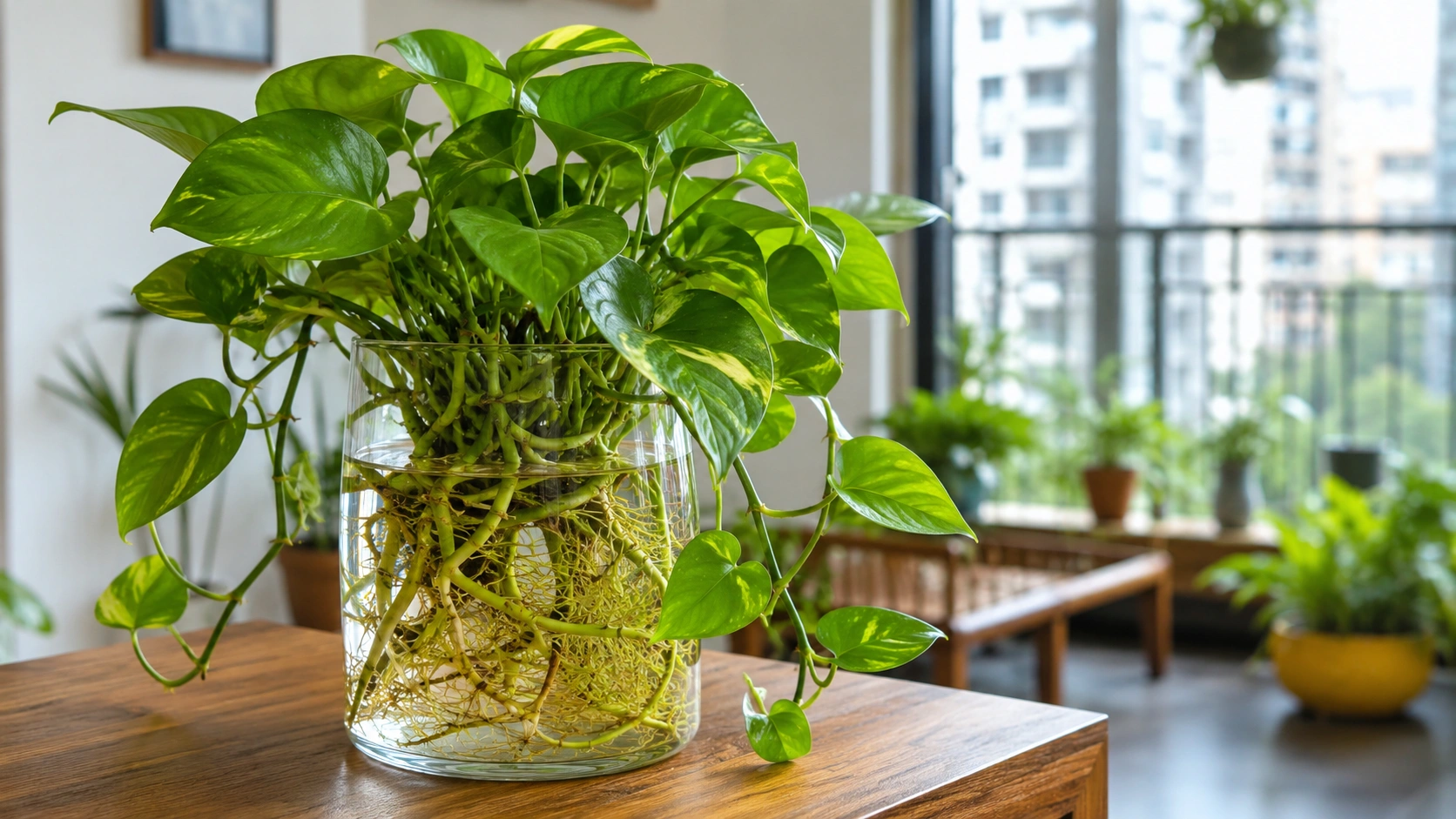
Pothos (Epipremnum aureum), commonly called the money plant in India, is famous for its heart‑shaped leaves and vining habit. Gardening Know How notes that pothos is easy to root and thrives in low light. It’s often grown in hanging baskets, but it can also live in water for months.
How to grow in water
- Cut a vine with three or four nodes (points where leaves emerge). Remove the lower leaves and place the cutting in a vase so that at least one node remains submerged
- Keep the jar in bright, indirect light. Low light is acceptable, but avoid deep shade and direct sun.
- Change the water every week or two. If you’re in a hard‑water area, let tap water sit overnight or use filtered water.
- Every two weeks, add a few drops of diluted liquid fertiliser to keep the leaves lush.
2. Lucky Bamboo
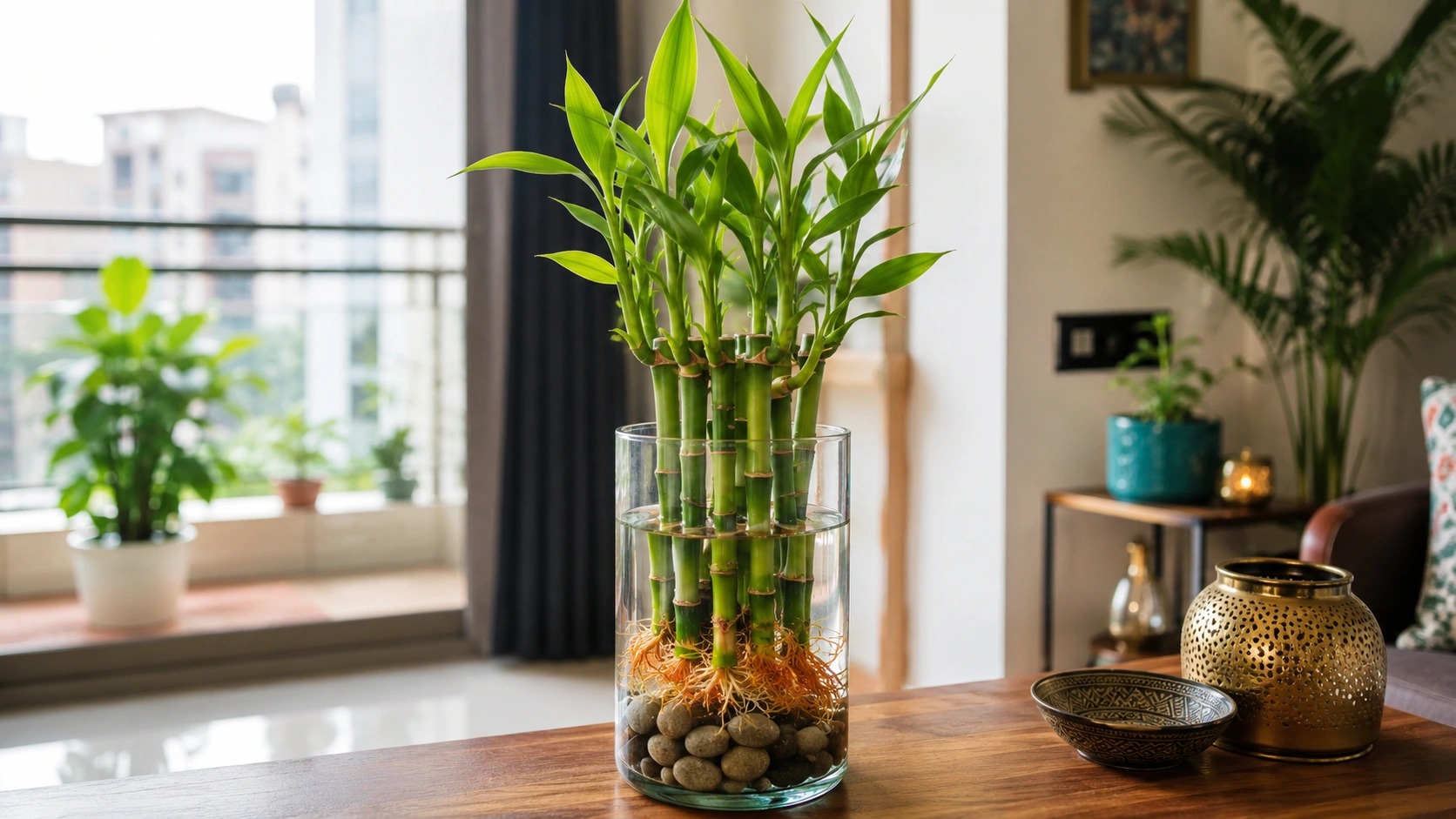
Lucky bamboo isn’t a true bamboo; it’s a dracaena that loves life in water. It is commonly sold as spiral stalks in vases, and Gardening Know How notes that the plant will be happy for years when its stalks are kept upright in a vase of water with pebbles.
How to grow in water
- Choose healthy stalks with roots. Place them in a glass vessel and add colored pebbles or marbles to hold them upright.
- Fill the container so that the lower leaves and roots are in water. Avoid covering the entire stem.
- Change the water weekly to prevent algae. During hot summers, top up water mid‑week as it evaporates quickly.
- Lucky bamboo prefers filtered light. In Indian apartments, a north‑ or east‑facing window is ideal.
3. Peace Lily
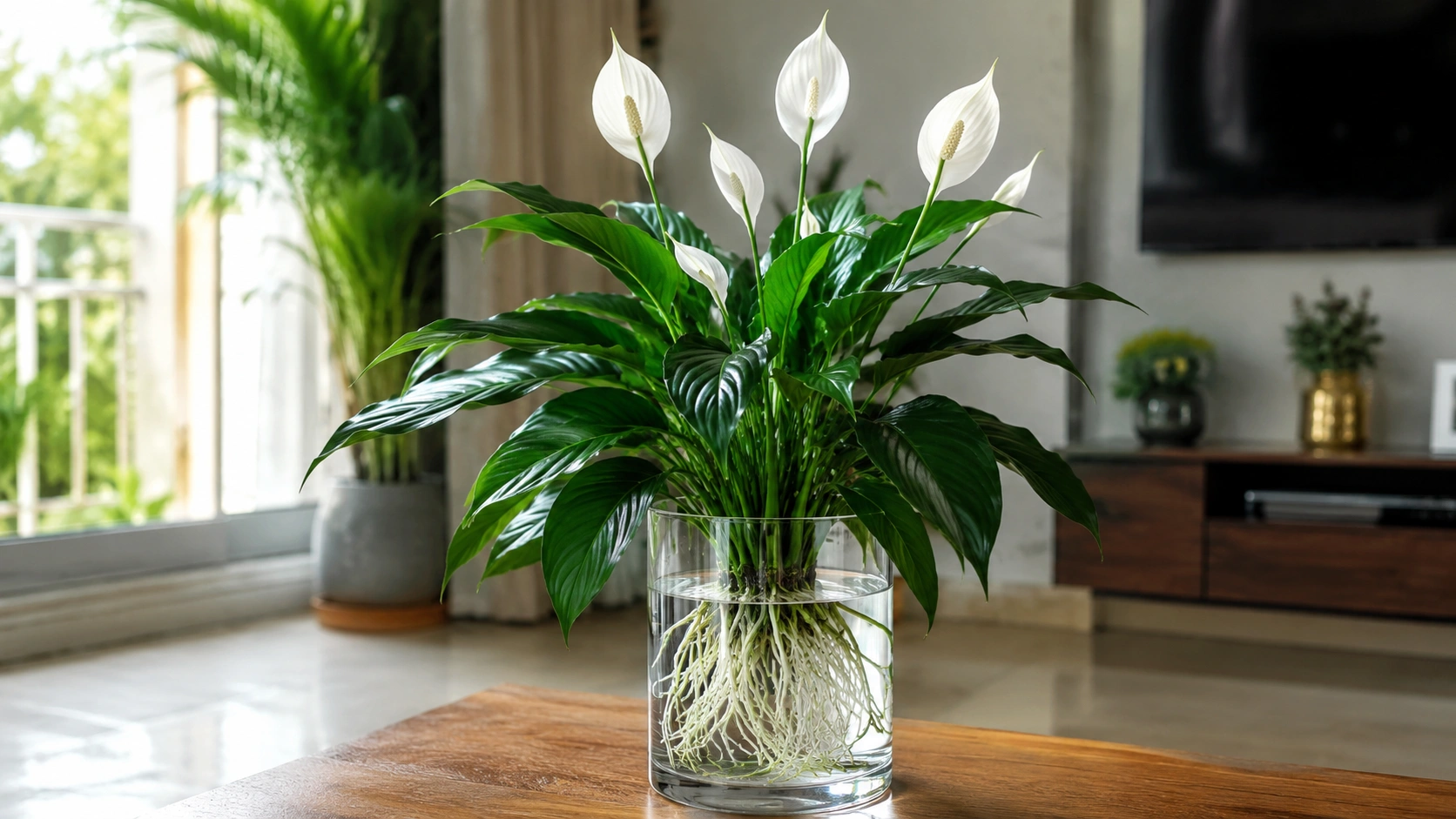
Peace lilies are elegant plants with dark leaves and white “flowers.” According to horticulturists, they grow very well in water as long as the base of the foliage stays above the water line, while the roots stay submerged.
How to grow in water
- Choose a healthy peace lily and gently wash the soil from its roots.
- Place it in a narrow vase or bottle so the roots sit in water and the crown stays above the water line.
- Keep the vase in bright, indirect light. Peace lilies bloom best with good light but can tolerate low light.
- Change the water twice a month. If the water becomes cloudy sooner, change it immediately. Add diluted fertiliser monthly.
4. Spider Plant
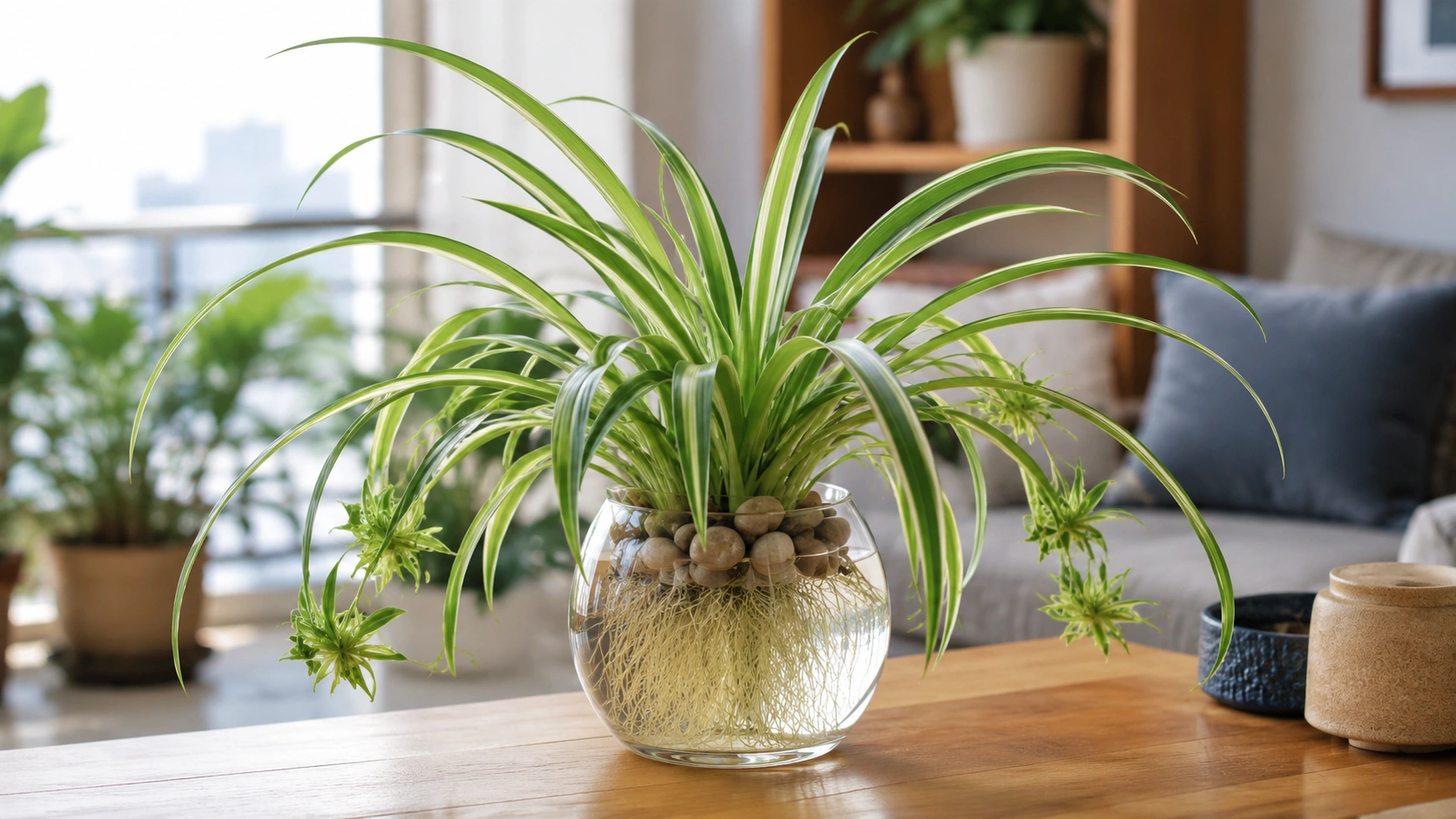
Spider plants are known for their arching leaves and baby plantlets. They are easy to propagate and enjoy growing in water. Gardening Know How notes that you can remove a “baby” from its stem and situate it in water, keeping the foliage dry but roots wet.
How to grow in water
- Snip off a plantlet with small roots attached.
- Place it in a small jar or test tube so that only the roots touch the water and leaves remain above
- Put it in bright, indirect light. Avoid direct sun, which can scorch leaves.
- Change water twice a week in hot weather and weekly in cooler months. Add a drop of liquid fertiliser every 3–4 weeks.
5. Chinese Evergreen
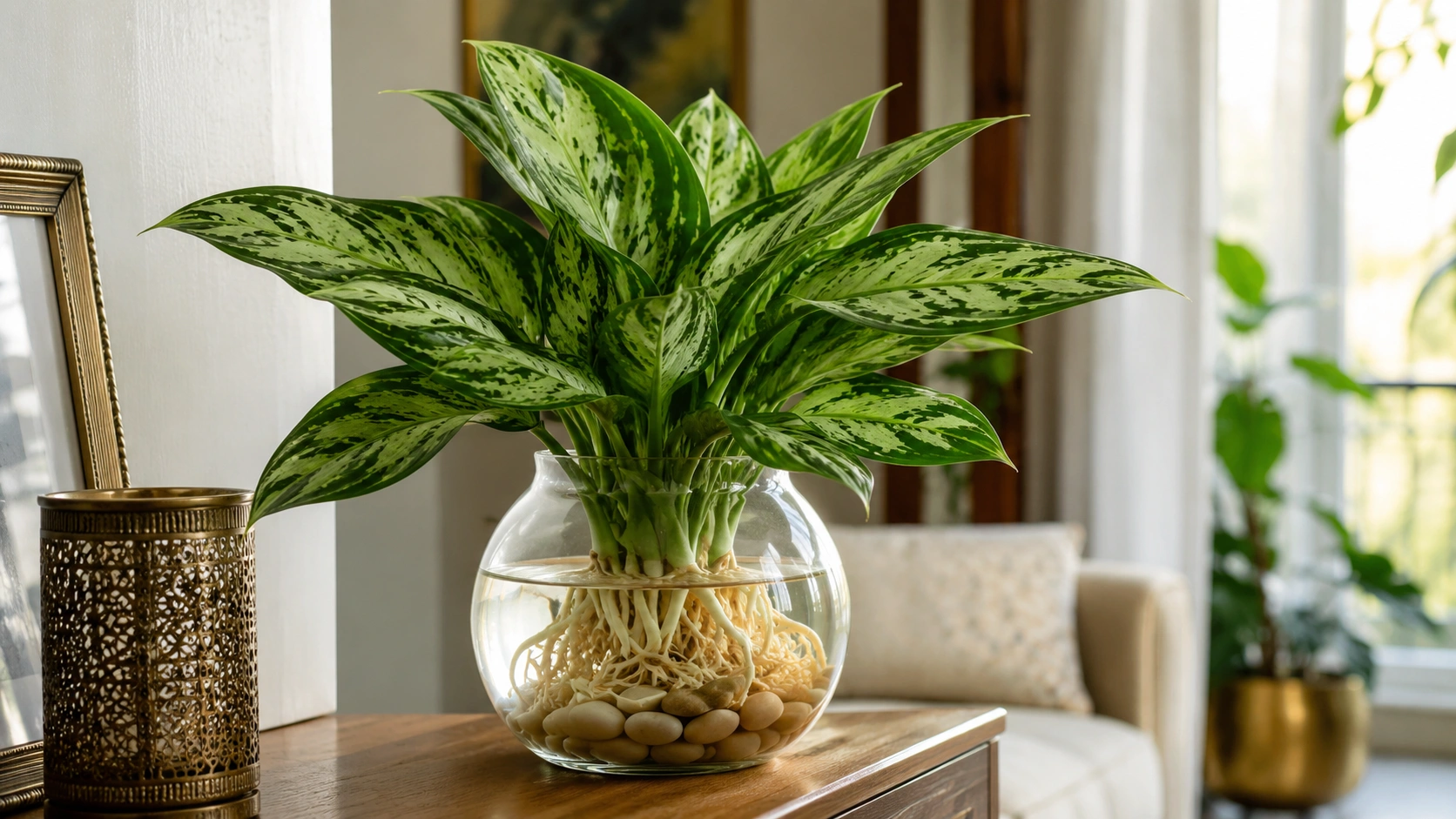
Chinese evergreen is a tropical beauty with patterned leaves. Although it isn’t a true evergreen tree, the plant grows well in water when cuttings are placed in a vase.
How to grow in water
- Take stem sections about the length of your hand and remove the lower leaves.
- Place the cuttings in water, ensuring that at least two nodes are submerged.
- Change the water twice a week during summer and once a week in winter.
- Add a little hydroponic fertiliser once a month.
- Keep in indirect sunlight; direct sun can fade leaf colours.
6. Orchids
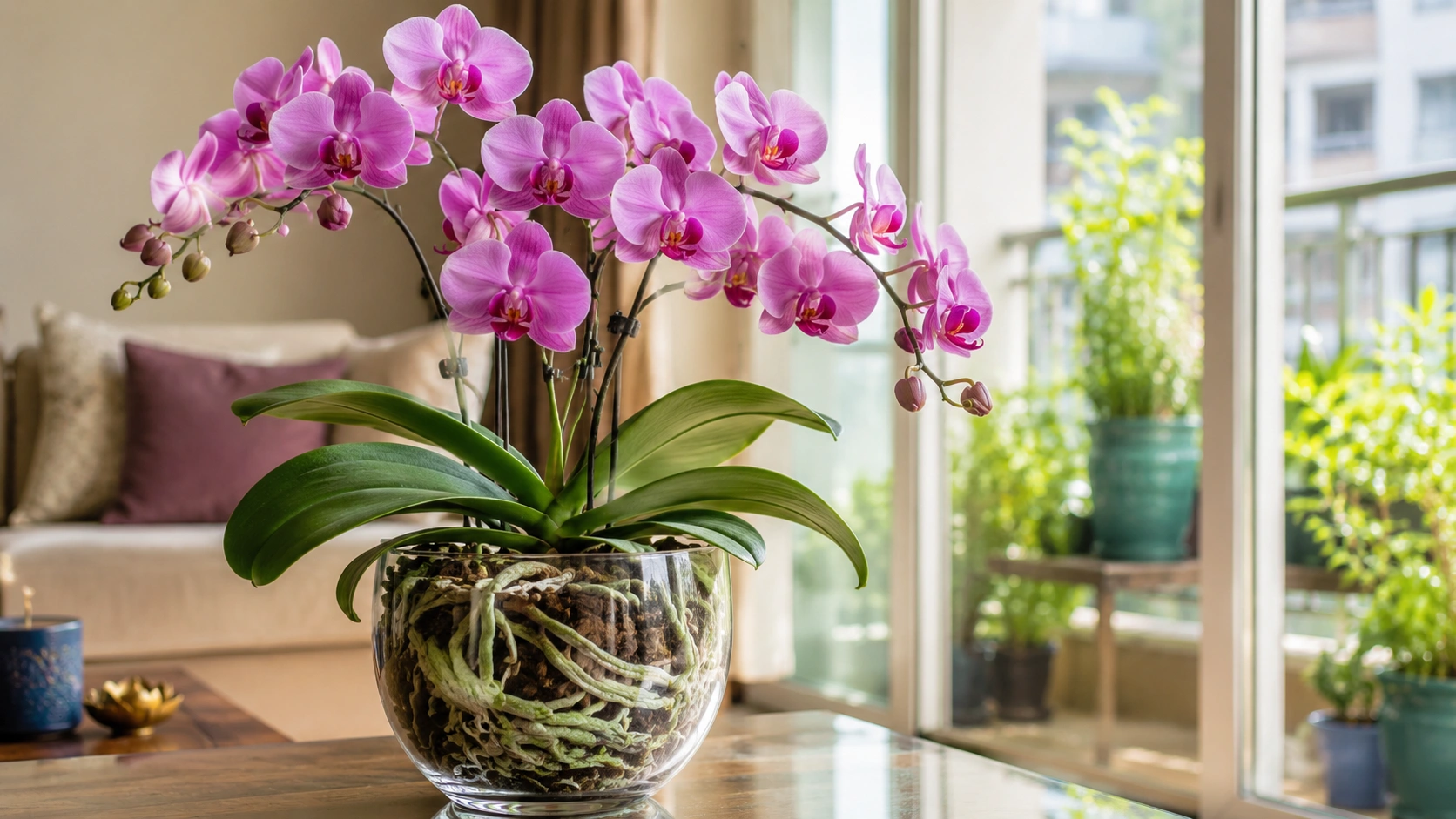
Orchids, especially Phalaenopsis hybrids, which are common in Indian stores, are epiphytes. Many orchids have roots covered with a moist membrane and can live on bark or other supports rather than soil. In water culture, their roots should not be permanently submerged; instead, they can be grown on bark or with occasional soaking.
How to grow in water
- Remove the orchid from its potting mix and rinse off any medium.
- Suspend the plant over a vase so that only the root tips dip into water for a few hours a day, or place it on a piece of bark above water to maintain humidity.
- Mist the exposed roots daily during dry weather, and soak the roots in water for 15–20 minutes once a week. Use room‑temperature water.
- Keep the orchid in bright, filtered light. East‑facing windows are ideal.
7. Air Plants
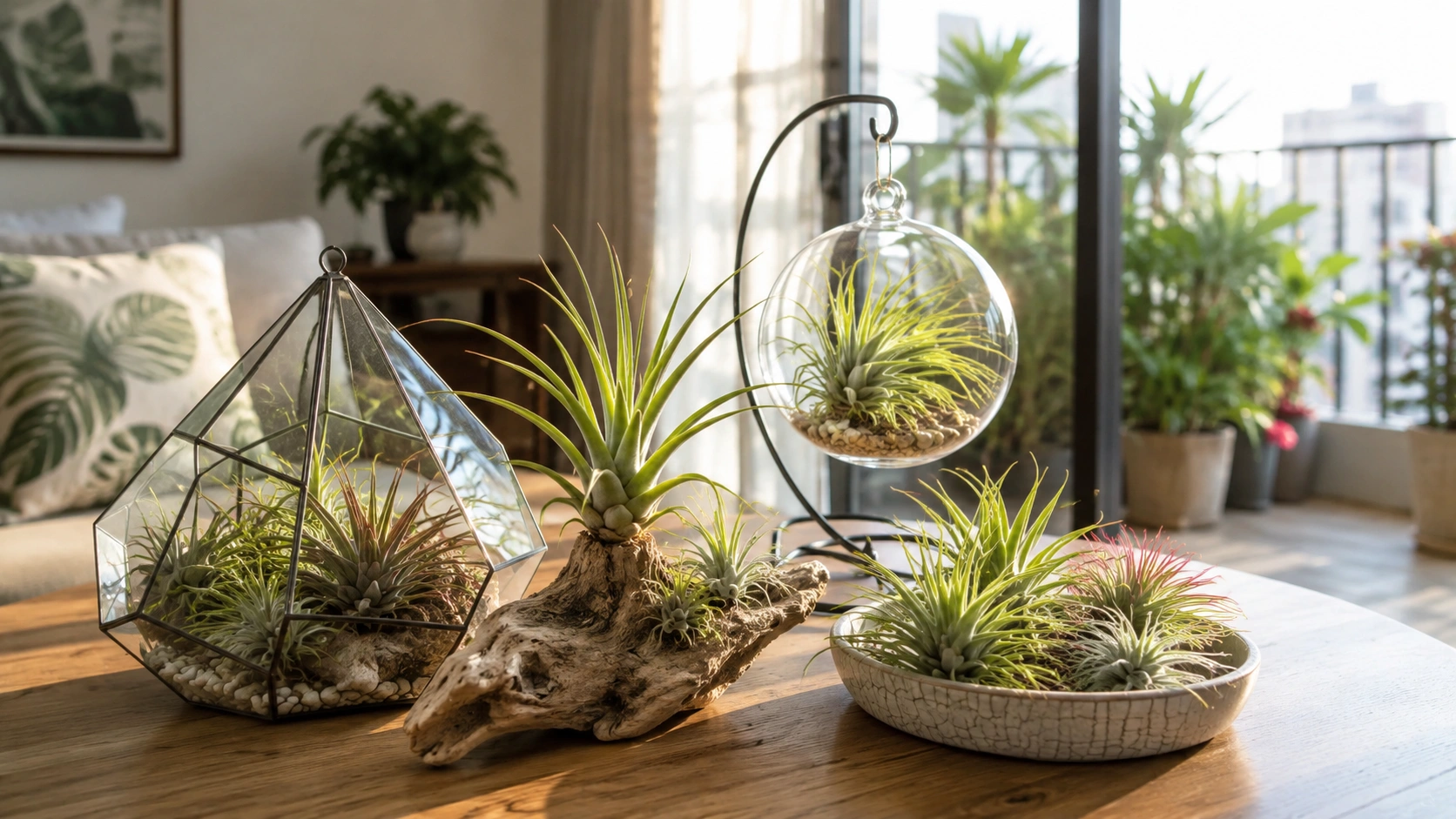
Air plants are members of the bromeliad family that grow attached to trees in nature. These epiphytes do not need soil and absorb moisture and nutrients through their leaves. They thrive in bright, indirect light and require regular misting or soaking.
How to grow without soil
- Place air plants on driftwood, shells, or hanging displays. No pot is needed.
- Provide bright, indirect light. Keep them away from the harsh noon sun.
- Soak the plants in room‑temperature water for about 20–30 minutes once a week, then shake off excess water and let them dry upside down.
- Mist them 1–2 times per week between soaks, especially during dry seasons. In humid climates like coastal India, misting frequency can be reduced.
Experience‑Based Expert Tips for Indian Homes
- Avoid stagnant water: In Indian climates, especially during the monsoon, standing water becomes a breeding ground for mosquitoes. Use narrow‑necked containers, change water frequently, and consider adding a drop of neem oil.
- Use filtered or boiled water: Hard tap water can cause salt build‑up on leaves and roots. Let water sit overnight or boil and cool before use.
- Protect from direct sun: Most water‑grown plants prefer bright, indirect light. Protect them from harsh midday sun, which can cook the leaves.
- Support your plants: Glass vases can topple easily. Use sturdy plant stands or wall mounts to keep them secure. Urban Plant’s metal stands and test‑tube holders are ideal for Indian balconies and terraces.
- Fertilise lightly: Soilless plants rely on you for nutrients. Use liquid or hydroponic fertiliser sparingly—once every two to four weeks is usually sufficient
Frequently Asked Questions
Which plants grow without soil indoors?
Money plant, lucky bamboo, peace lily, spider plant, Chinese evergreen, orchids, and air plants can grow without soil indoors. These plants grow well in water, bark, pebbles, or humid air when they get clean water, indirect light, and basic care.
Can plants grow without soil in India?
Yes, many indoor plants can grow without soil in India. Plants like money plant, lucky bamboo, peace lily, and spider plant adjust well to Indian homes. They are ideal for balconies, indoor corners, office desks, and small apartments.
What is hydroculture in simple words?
Hydroculture means growing plants without soil, usually in water or a soilless medium. In this method, plant roots get water, oxygen, and nutrients directly. It is a clean and beginner-friendly way to grow indoor plants at home.
Which is the easiest plant to grow without soil?
The money plant is the easiest plant to grow without soil. Just place a healthy cutting with nodes in clean water and keep it in bright indirect light. From our gardening experience, it is the safest choice for Indian beginners.
Can a money plant grow in water permanently?
Yes, the money plant can grow in water for a long time if the water is changed regularly. Keep at least one node inside water, avoid direct sunlight, and clean the jar when algae appear. Add mild liquid nutrients once every few weeks.
Conclusion
Growing plants without soil is more than a trend—it’s a practical solution for Indian urban gardeners seeking greenery without mess. By understanding hydroculture and choosing the right species, you can enjoy vibrant foliage, cleaner balconies, and easy maintenance.
Pothos, lucky bamboo, peace lilies, spider plants, Chinese evergreen, orchids, and air plants all adapt beautifully to water culture when given fresh water, light, and occasional fertiliser.
Join our WhatsApp community for more tips and inspirations. Happy gardening!


