
-2.webp)
Urban Indians juggle hectic jobs, crowded commutes, family obligations, and a constant stream of notifications. Yet many of us still crave the calm of greenery – a balcony lined with herbs, a few pots of flowering perennials,s or a lush vertical wall.
The good news? You don’t need hours of free time.
With smart plant choices, efficient tools, and a simple routine, you can build a healthy urban garden that thrives with just 10 minutes of care each day.
This guide combines expert horticultural advice with local context and practical product recommendations to help you get started.
Why Urban Gardening Matters for Busy Indians
City life often feels disconnected from nature. Studies show that spending time with plants can lower stress and improve mood. Balcony and terrace gardens also reduce heat and purify the air around our homes.
The Brihanmumbai Municipal Corporation’s Greening Mumbai manual encourages citizens to create balcony gardens because they contribute to urban biodiversity and climate resilience.
Even a few planters on a windowsill can host beneficial insects and provide fresh herbs for your kitchen.
Apart from environmental benefits, gardening teaches patience and mindfulness. Watching seedlings sprout, or flowers bloom, gives a sense of accomplishment that can brighten even the busiest day. When managed efficiently, these rewards don’t need to come at the cost of your schedule.
Set Up Your Low‑Maintenance Urban Garden
Choose the Right Containers & Soil
A good container and soil mix are the foundation of a low‑maintenance garden:
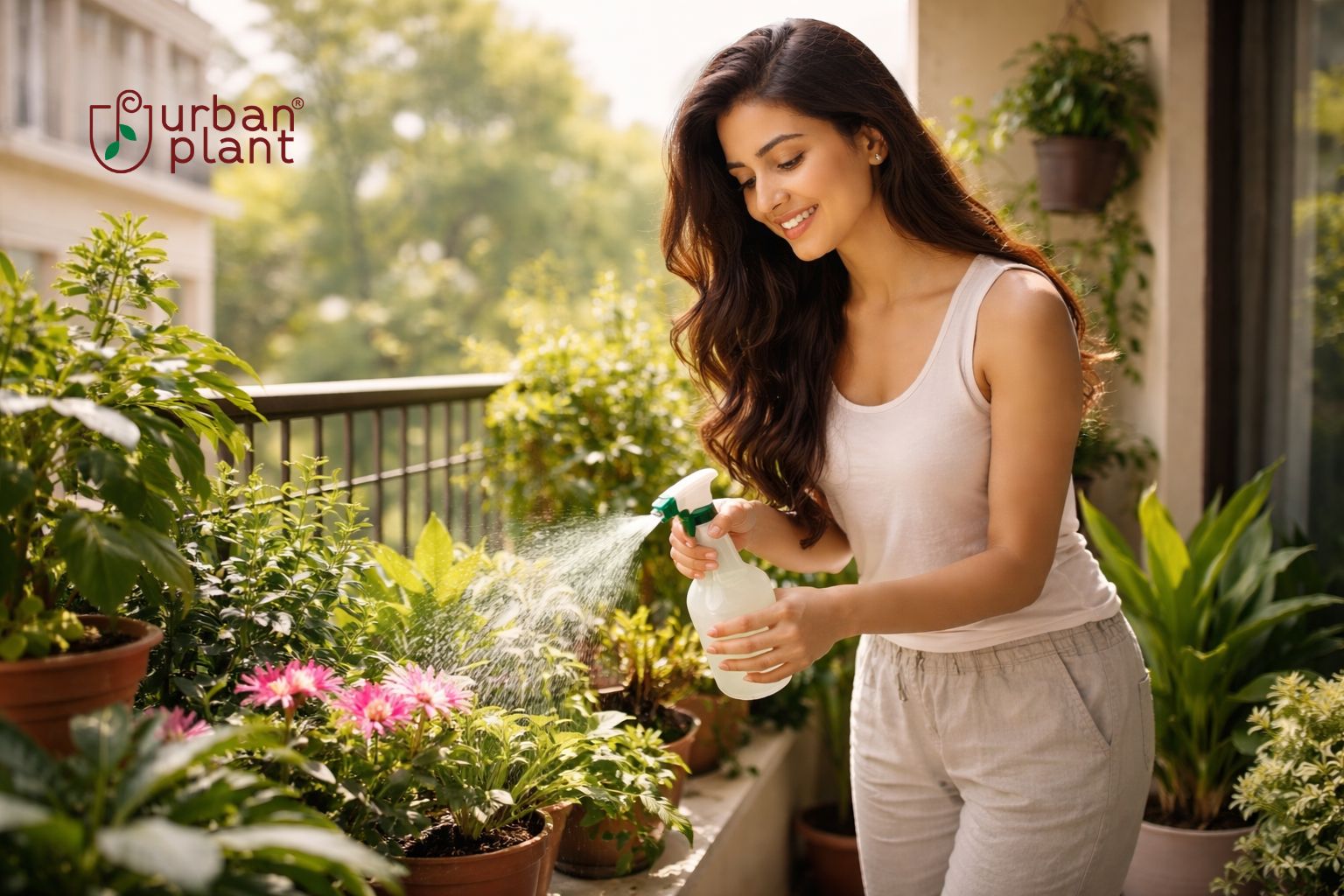
- Opt for self‑watering pots: These containers have built‑in reservoirs that allow plants to absorb water as needed, preventing over‑ and under‑watering. Our Aquaflow Self‑Watering Pot offers smart watering in a compact design.
- Ensure drainage: Whatever pot you use, make sure it has drainage holes so excess water can escape. Poor drainage is a common cause of root rot.
- Use lightweight potting mix: Avoid regular garden soil, which compacts easily. Use a sterile potting mix enriched with organic matter and perlite; it retains moisture while allowing roots to breathe. Our organic Care Blend Bio Fertilizer can be mixed into the soil to feed plants gradually.
Pick Low‑Maintenance Plants
Selecting hardy species is key. Perennial flowers like lavender, roses, and asters thrive in most Indian climates and require little upkeep.
The Better India notes that perennials offer an optimum blend of beauty and resilience.
English lavender varieties such as ‘Munstead’ or ‘Hidcote’ are drought‑tolerant and attract bees and butterflies, supporting pollinators while adding fragrance. Other easy‑care options include:
- Succulents and cacti: These store water in their leaves and need watering only when the soil is dry.
- Herbs like basil and mint: Fast‑growing, edible, and perfect for container gardens.
- Snake plant and pothos: Tolerant of low light and irregular watering.
- Shrubs like hibiscus or bougainvillea: Provide colour and can be trained vertically.
Make the Most of Limited Space
Urban apartments often lack floor space, but walls and railings offer untapped real estate. A vertical garden maximizes space and looks stunning.
According to gardening experts, vertical gardens can incorporate many plants in a small area and are easier to maintain because you don’t need to bend down to care for them.
They also improve air quality by filtering pollutants and can act as soundproof barriers. You can install ready‑made vertical planters or hang pots from balcony railings. Metal stands and macramé hangers help you build upward without cluttering your floor.
Read Also
How to Start Urban Gardening at Home: 10 Easy Steps for Indian Beginners (2026)
Your Daily 10‑Minute Urban Gardening Routine
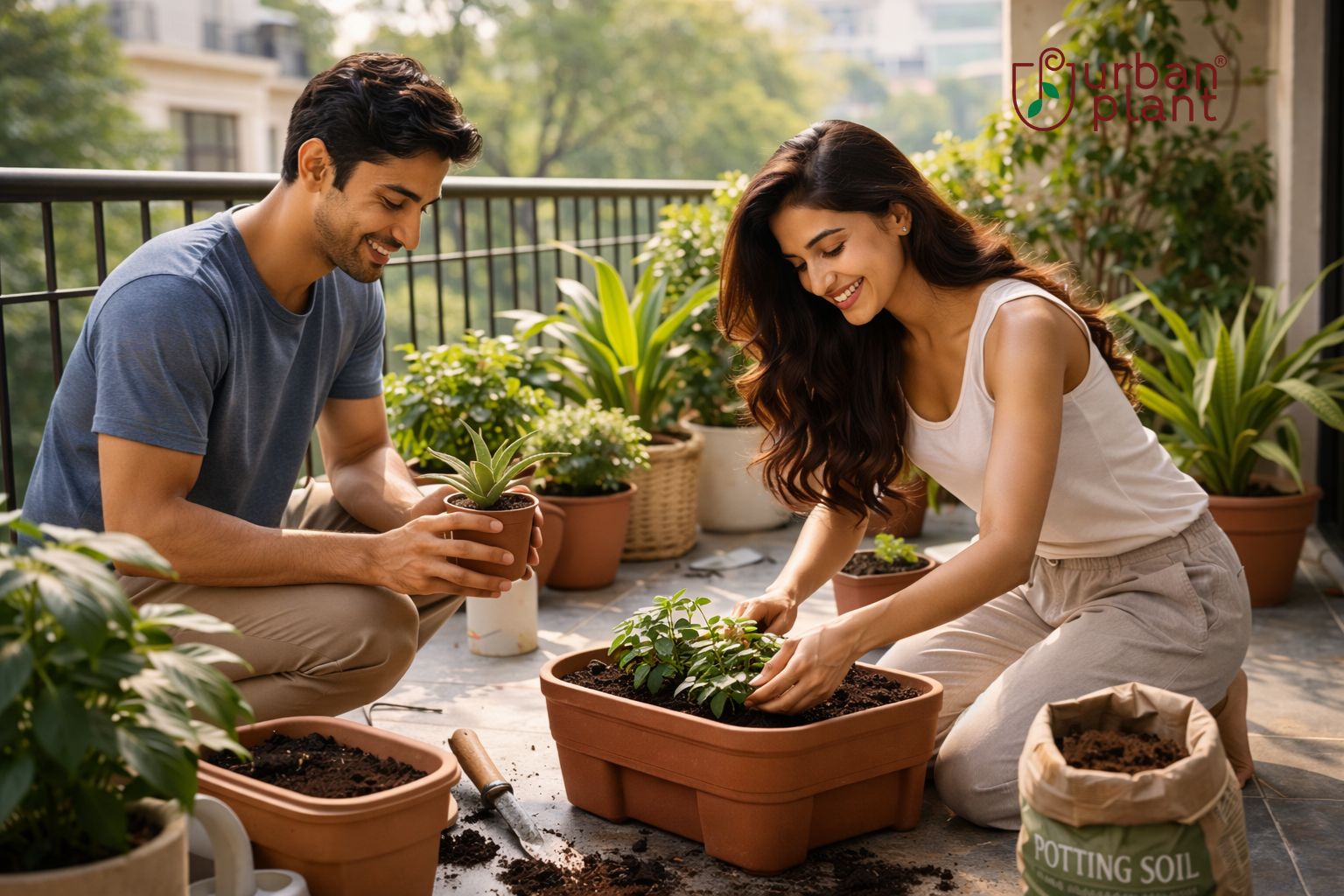
Even a small routine can keep your garden vibrant. Here’s how to break down those 10 minutes:
1. Water Wisely (3 minutes)
- Water early in the morning: Experts recommend watering between 4 AM and 9 AM to reduce evaporation and disease risk. The Gardening experts suggest watering before 9 AM or after 7 PM to avoid the day’s heat. Morning watering allows plants to absorb moisture and dry off quickly, reducing fungal issues.
- Aim for the roots, not the leaves: Direct the water at the soil level rather than showering foliage; keeping leaves dry helps prevent diseases
- Check soil moisture: Press your finger about 2 cm into the soil. Water only if it feels dry; over‑watering leads to root rot.
- Use self‑watering pots or drip irrigation: These systems regulate moisture and minimize waste. Urban Plant’s watering cans and self‑watering planters make this task easier.
2. Mulch & Weed (2 minutes)
- Apply mulch: Spread organic mulch (bark, wood chips, dry leaves or coco peat) around your plants. Mulching preserves soil moisture, blocks weed seeds from receiving light, and stunts their growth.
- Quick weed check: Pull out any small weeds before they compete with your plants for water and nutrients. Mulch reduces weed germination, so you’ll spend less time weeding overall.
3. Light, Position & Prune (3 minutes)
- Rotate and reposition: Move pots occasionally to ensure all sides of a plant receive sunlight. Strategic positioning matters: place plants where they get morning sun and afternoon shade to reduce moisture loss and watering frequency.
- Pinch and prune: Remove dead leaves or spent flowers. This directs energy to new growth and keeps plants tidy. Herbs like basil benefit from regular pinching to encourage bushiness.
- Sacrificial plant for pests: Plant a “sacrificial lamb” (a flowering plant that pests prefer) near your main garden. Bugs feast on the sacrificial plant and leave your other plants alone. Combine this with organic pest control sprays for extra protection.
4. Observe & Connect (2 minutes)
- Inspect your plants: Look for signs of stress like drooping leaves, yellowing, or spots. These cues may indicate water issues, pests, or nutrient deficiencies. Fixing problems early saves time later.
- Enjoy your green companions: This routine is also a mindfulness practice. Take a moment to smell lavender blooms, touch basil leaves, or watch butterflies visit flowers. A short connection with nature can reset your mood for the day.
Weekly & Monthly Tasks
Your daily routine keeps your garden healthy, but some jobs are best done once a week or monthly:
- Deep watering: Once a week, give your plants a thorough soak so the moisture reaches the roots (at least 10 cm deep).
- Feed with fertilizer: Every 4–6 weeks, add a slow‑release fertilizer or compost.
- Repot and divide: Repot fast‑growing plants annually or when roots outgrow the container. Divide perennial herbs and flowers to control size and propagate new plants.
Time‑Saving Hacks for Busy Gardeners
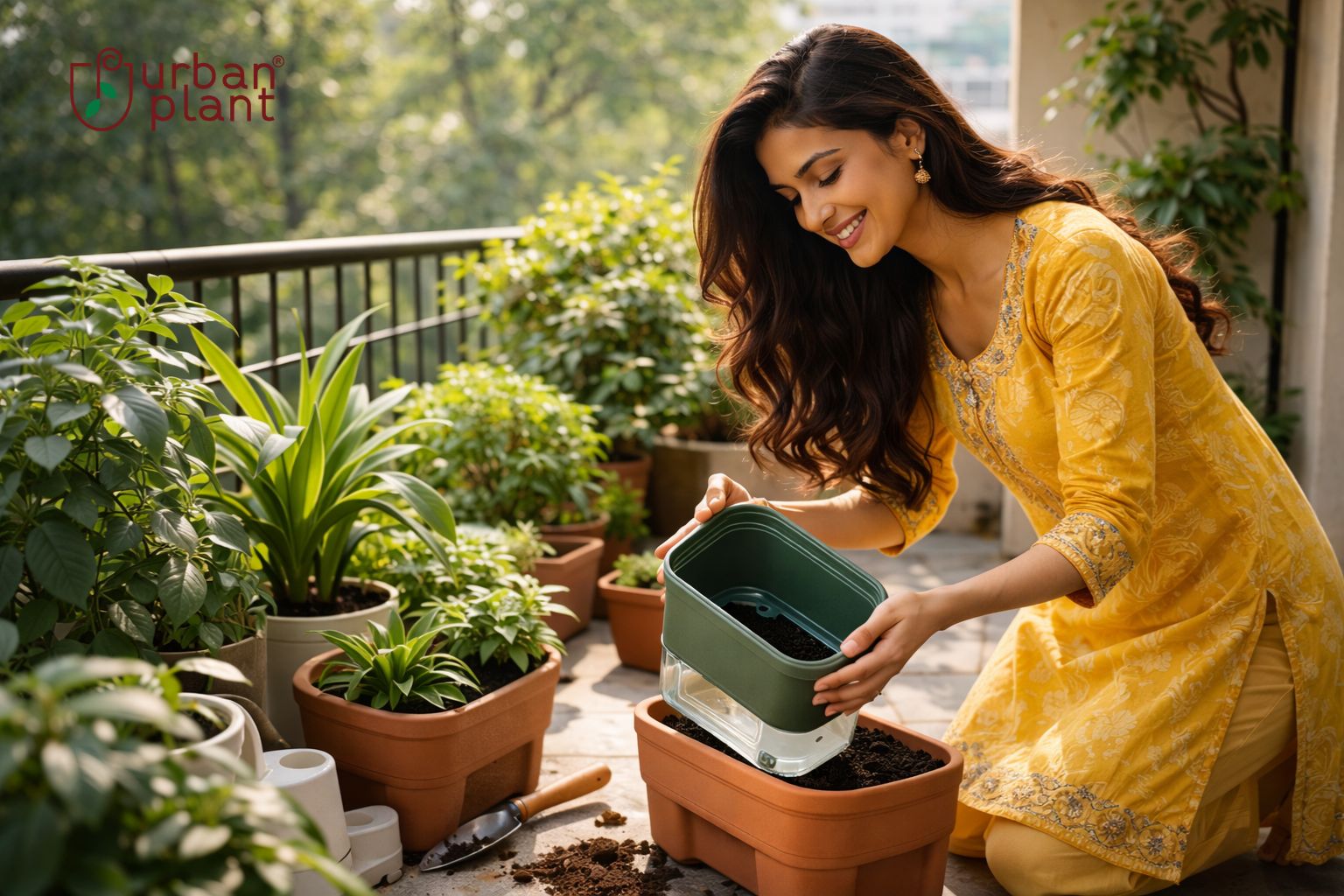
Even with a 10‑minute routine, extra hacks can automate plant care:
- Install a drip or soaker system: Soaker hoses deliver water slowly to the root zone and keep foliage dry. Drip irrigation can be connected to a timer (controller) so you water automatically at the best times.
- Collect rainwater: Using rain barrels saves money and provides chlorine‑free water for your plants. In the monsoon season, store rainwater to use during dry spells.
- Use vertical planters and stands: Vertical gardens are not only space‑efficient but also easy to maintain since plants are at eye level.
- Embrace minimalism: Start with a few plants and gradually expand. Healthy, well‑spaced plants use less water and require less maintenance than overcrowded pots.
Low‑Maintenance Plants for Indian Apartments
Below is a quick reference table of beginner‑friendly plants suited to various Indian microclimates. These species require minimal care and can handle occasional neglect.
| Plant | Light Needs | Watering | Notes |
|---|---|---|---|
| English Lavender | Full sun | Infrequent; drought-tolerant | Attracts bees & butterflies and thrives in pots. |
| Snake Plant | Low–medium light | Allow the soil to dry completely | Air-purifying; ideal for offices and bedrooms. |
| Money Plant (Pothos) | Indirect light | Water when the top inch is dry | Fast-growing vine; good for hanging baskets. |
| Aloe Vera | Bright light | Once every 2–3 weeks | Succulent with medicinal gel. |
| Mint/Basil | Partial sun | Keep soil lightly moist | Great for cooking; pinch regularly for bushy growth. |
| Spider Plant | Indirect light | Moderate; don’t let soil dry out | Produces baby plantlets for easy propagation. |
| Hibiscus/Bougainvillea | Full sun | Regular watering in pots | Provide vibrant blooms; prune to control size. |
FAQs
What is low-maintenance urban gardening in India?
Low-maintenance urban gardening means growing easy-care plants that need minimal watering, pruning, and attention, making it ideal for busy Indian apartment and city lifestyles.
Can plants really be maintained in just 10 minutes a day?
Yes. With the right plants and pots, a simple 10-minute daily routine—checking soil, quick watering, and leaf cleanup—is enough to keep plants healthy.
Which plants are best for busy people in India?
Snake plant, money plant, aloe vera, spider plant, lavender, and basil are ideal for busy people due to their low water needs and high adaptability.
Is urban gardening possible if I have no gardening experience?
Absolutely. Urban gardening is beginner-friendly when you start with low-maintenance plants, basic pots, and a simple daily care routine.
How often should I water low-maintenance plants?
Water only when the topsoil feels dry. Overwatering is a common mistake and can harm plants more than underwatering.
Are self-watering pots good for busy urban gardeners?
Yes. Self-watering pots reduce daily effort, prevent overwatering, and keep plants hydrated automatically—perfect for busy schedules and travel.
Conclusion: Grow Green, Even When You’re Busy
Urban gardening doesn’t have to be time‑consuming. With the right set‑up and routine, you can enjoy fresh herbs, vibrant flowers, and cleaner air in just a few minutes each day. Remember to water smartly, mulch generously, and choose resilient plants like lavender and succulents.
For more urban gardening tips, WhatsApp for daily inspiration.


