
-2.webp)
Living in an apartment doesn’t mean you can’t enjoy a lush, productive garden. In fact, container gardens thrive on balconies and patios because they offer complete control over soil, water, and sunlight. To get the most from your green space, it helps to establish a routine.
This article shares an expert‑developed apartment gardening maintenance checklist—daily, weekly, and monthly tasks tailored for Indian urban gardeners.
We’ll also link to useful products and high‑authority resources so you can confidently cultivate herbs, veggies, and ornamentals.
Why a Routine Matters
Plants in pots rely entirely on your care. Unlike garden beds, containers don’t benefit from ground moisture or natural nutrient cycling. Frequent watering leaches nutrients and causes soil to compact.
Overwatering is also a leading cause of plant death; sticking your finger two inches into the soil and watering only when it feels dry prevents this.
Establishing a simple checklist ensures you water, feed, groom, and repot at the right time while also catching pests and diseases early. This discipline leads to healthier plants, higher yields, and more enjoyable gardening.
Daily Apartment Gardening Checklist
1. Watering and Moisture Checks
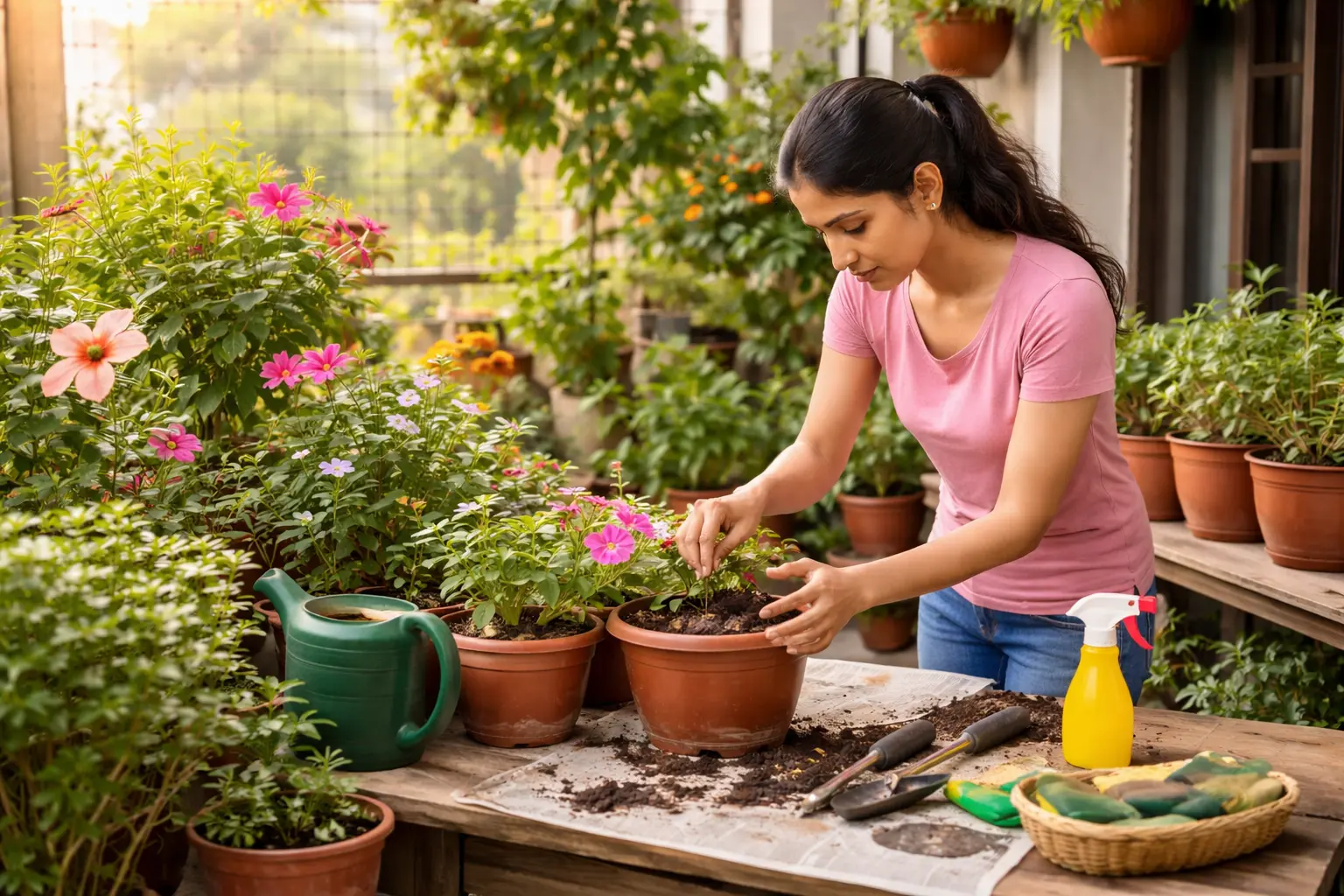
- Check soil moisture every morning: Balcony plants dry out quickly due to wind and sun. Use the finger test: insert your finger 2–3 cm into the pot; if it feels dry, water. Avoid fixed schedules—plants care about soil moisture, not calendars
- Water deeply at the soil level: Direct water towards the base so roots absorb it and avoid wetting leaves. Water until you see it flow from the drainage holes; this ensures the entire root ball is saturated.
- Adjust for weather: In hot Indian summers, many container plants need watering once daily or even twice a day. In monsoon or winter, cut-back—drip systems typically run 2–3 times a week in summer and once a week or less in winter.
2. Quick Grooming and Pest Checks
- Remove dead leaves and spent blooms: Pinching or snipping off faded flowers and damaged leaves encourages new growth and keeps plants tidy.
- Inspect for pests: Look under leaves and along stems for aphids, mealybugs, or fungus. Washing with plain water can dislodge early infestations. For persistent pests, spray a homemade neem oil solution: mix 1–2 spoons of mild dish soap with 1 gallon of warm water, add 1–2 spoons of neem oil, and spray thoroughly. Reapply every 7–14 days.
- Rotate plants: Turning pots a quarter rotation daily ensures even growth and prevents legginess
Enjoy Your Garden
Set aside 10–15 minutes to water, prune, admire blooms, and breathe in the greenery. Regular interaction builds an intuitive understanding of each plant’s needs
Read Also
The Ultimate Month-Wise Vegetable Sowing Calendar India (2026): Grow Smarter
Weekly Apartment Gardening Maintenance Checklist
.webp)
1. Grooming and Pruning
- Deadhead and pinch: Remove old flowers and pinch back annuals like impatiens and begonias to promote bushy growth and more blooms. Prune leggy stems to just above a leaf or bud.
- Groom outliers: Once a week, snip off fading leaves or overly vigorous stems so smaller plants aren’t crowded. Training vines by pruning helps maintain form and airflow.
2. Feeding and Soil Care
- Fertilise regularly: Frequent watering leaches nutrients. Mix slow‑release pellets into the soil and supplement with a water‑soluble fertiliser every one to two weeks at half strength. Liquid feeds should be applied when the soil is moist. Premium Bloom & Grow Fertiliser Combo (link) provides balanced nutrients for veggies, flowers, and herbs.
- Top up mulch or pebbles: A thin layer of sphagnum moss, aquarium gravel, or cedar bark prevents soil compaction and reduces splash damage. Cedar bark’s pleasant aroma can repel insects.
- Check drainage trays: Empty excess water to prevent root rot and mosquitoes. If the soil stays wet, ensure drainage holes aren’t blocked.
3. Structural and Environmental Checks
- Move containers for light and temperature: Indian balconies experience intense afternoon sun and strong winds. Relocate pots to balance sun exposure and protect from gusts. Dark pots absorb more heat; cover them with trailing plants or choose light‑coloured planters.
- Inspect supports: Ensure trellises, stakes, and hanging planters are secure, especially if you’re growing climbers like tomatoes or beans.
4. Pest Control
Spray your neem solution or organic pest controller weekly during growing seasons. Organic Pest Controller offers pre‑mixed neem and soap for convenience.
Monthly Apartment Gardening Checklist
1. Repotting and Soil Refresh
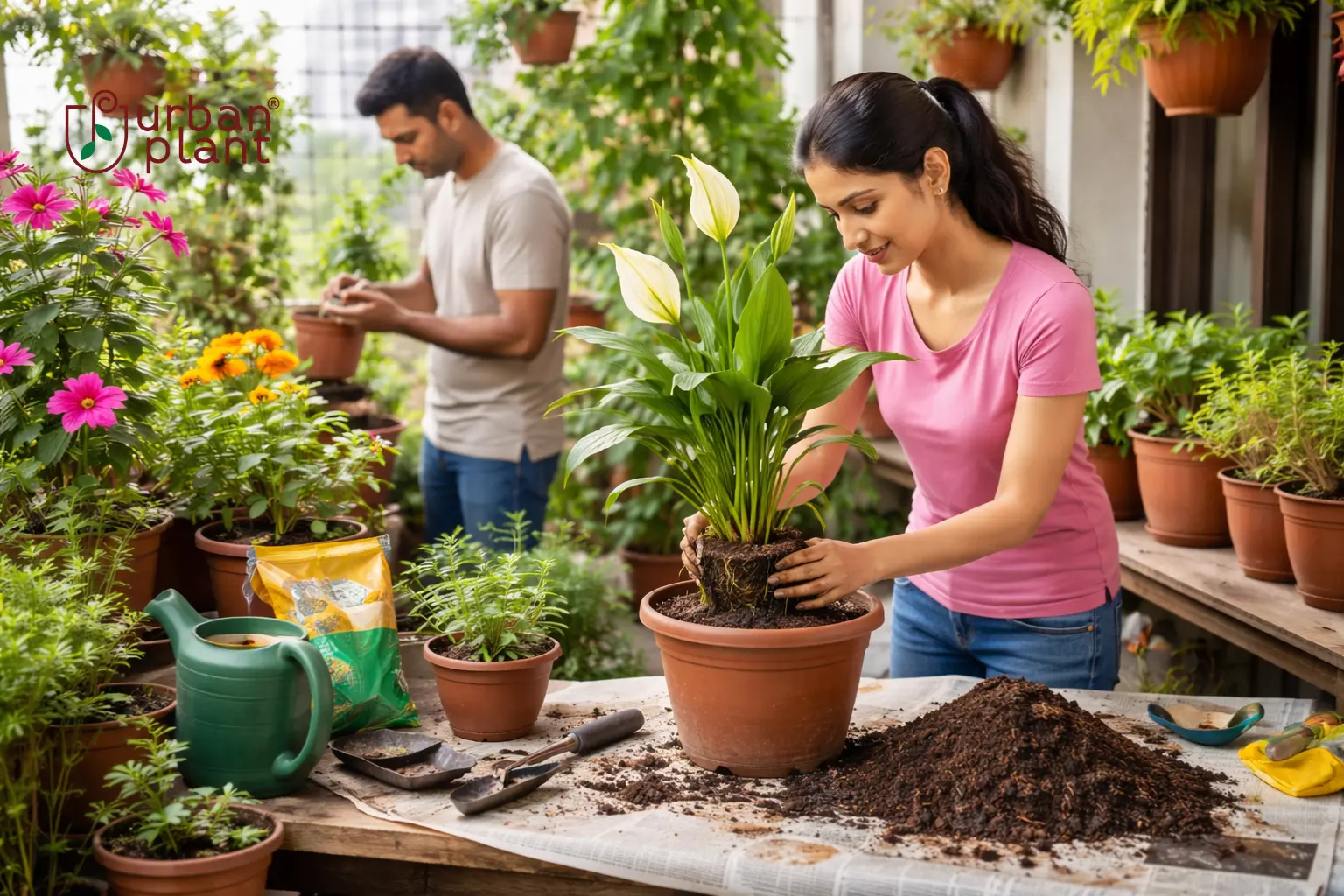
- Assess pot size and root health: Plants may need repotting if roots emerge through drainage holes or the soil dries quickly. Most indoor plants benefit from fresh soil every 12–18 months; fast growers may need yearly repotting.
- Choose the right container: Select a pot 1–4 cm wider than the current one, with drainage holes. Oversized pots hold excess water and promote rot. For small vegetables, Krishi Jagran recommends 5‑gallon containers; smaller crops like lettuce and herbs do well in 1–3-gallon pots.
- Replace potting mix: Annual soil replacement is necessary for small pots; soil that settles should not simply be topped up because roots grow downward. Replace old soil to remove accumulated salts and replenish nutrients. For large pots, prune roots every 2–3 years. Premium Potting Mix uses coco‑peat, perlite, and vermicompost for excellent aeration.
2. Deep Feeding and Cleaning
- Flush and feed: Once a month, flush pots with water to remove built‑up salts (especially in regions with hard water) and apply organic compost or vermicompost on the surface.
- Clean containers and tools: Wash pots with a mild bleach solution and scrub away salt residue before reusing. Clean your pruners and trowels to prevent disease spread.
3. Planning and Seasonal Adjustments
- Refresh plant combinations: Rotate or replace seasonal plants. Krishi Jagran notes that reusing old soil invites pests and nutrient depletion. Plan for upcoming weather—plant marigold, pansies, and spinach in winter, or basil and hibiscus in summer.
- Review layout: Use the “thriller, filler, spiller” method for balanced containers. Consider companion planting: marigolds deter pests when grown with tomatoes.
Seasonal & Regional Tips for Indian Apartments
| Season | Key Tips for Apartment Gardens | Recommended Plants |
|---|---|---|
| Summer (Apr–Jun) | Water early mornings; pots may need watering daily or twice a day. Provide afternoon shade for tender greens. Use light-coloured pots to reduce heat. | Basil, hibiscus, bougainvillea, okra |
| Monsoon (Jul–Sep) | Reduce watering; turn off drip irrigation when rain is frequent. Move pots under shelter to avoid root rot. Check drainage regularly. | Ginger, turmeric, mint, and coriander |
| Winter (Oct–Feb) | Water less often—once every few days, as pots dry slowly. Place plants to maximise morning sun. Fertilise lightly because growth slows. Protect from frost in northern states. | Marigolds, pansies, spinach, peas |
Product Picks from No.1 Home Gardening Online Store
To simplify your routine, try these Urban Gardening essentials:
- Essential Gardening Tools Kit – A seven‑piece kit containing a trowel, pruner, fork, cultivator and gloves for daily care.
- Premium Potting Mix – A light, soil‑free blend of coco‑peat, perlite and vermicompost that provides aeration and drainage.
- Self‑watering Pots – Ideal for busy gardeners; these pots regulate moisture and reduce watering frequency.
- Premium Bloom & Grow Fertiliser Combo – Balanced fertilisers formulated for flowers, roses and vegetables.
- Organic Pest Controller – Ready‑to‑spray neem‑based solution for safe pest management.
These links ensure you can quickly explore and purchase the right supplies for your balcony garden.
Frequently Asked Questions
What is an apartment gardening maintenance checklist?
An apartment gardening maintenance checklist is a structured routine of daily, weekly, and monthly plant care tasks—like watering, pruning, fertilising, and inspection—that helps urban gardeners keep plants healthy in limited spaces.
How often should apartment plants be watered?
Apartment plants should be watered only when the topsoil feels dry. In Indian summers, this may be daily; in winter, once every 3–4 days. Always avoid fixed schedules to prevent overwatering.
What are the daily tasks for apartment gardening?
Daily apartment gardening tasks include checking soil moisture, observing leaves for pests or stress, ensuring adequate sunlight, and removing dry or fallen leaves. These small checks prevent major plant problems.
What should I do weekly for my apartment garden?
Weekly apartment gardening includes light pruning, cleaning dusty leaves, rotating pots for even sunlight, checking drainage, and monitoring pests. Weekly care improves airflow and keeps plants balanced and disease-free.
What are the monthly gardening tasks for apartment plants?
Monthly tasks include loosening topsoil, adding compost or fertiliser, checking root health, inspecting pots, and assessing plant growth. These steps ensure long-term plant health in container gardens.
Is a gardening checklist helpful for beginners?
Yes, a gardening checklist is ideal for beginners. It removes confusion, builds consistency, and prevents common mistakes like overwatering or irregular feeding—making apartment gardening simple and stress-free.
How do I care for apartment plants in Indian summers?
Water plants early morning, provide afternoon shade, avoid fertilising during heatwaves, and ensure proper drainage. Light-coloured pots and moisture checks help prevent heat stress in summer balconies.
How do I prevent pests in apartment gardens naturally?
Regular inspection, proper airflow, and avoiding waterlogging prevent most pests. Neem oil spray every 10–14 days works as a safe, natural solution when pests appear in apartment plants.
Conclusion
Gardening in an apartment is rewarding when you follow a simple care routine. By checking soil moisture daily, grooming and fertilising weekly, and repotting or refreshing soil monthly, you’ll keep your balcony garden thriving.
Remember to adapt your watering and feeding schedule to India’s seasons and choose the right container size for each plant.
Follow us on Instagram for more tips and inspiration.


