
_(2)-3.webp)
Indoor plants can transform a space, but the planter color you choose is just as important as the plants themselves. The right pot color can highlight lush greenery, complement your interior palette, and even regulate root temperature.
In this guide, we’ll dive into planter color ideas for Indian homes, explain how colors affect mood and plant health, and share practical styling tips tailored for our climate.
Whether you’re styling a minimalist apartment in Bengaluru or a vibrant urban flat in Nārnaund, Haryana, you’ll find actionable advice and shopping links to pots and planters products.
Why Planter Color Matters
.webp)
Choosing a planter isn’t just about aesthetics – it’s about creating harmony between your plants, décor, and local climate. Garden experts note that a planter’s color shapes mood, highlights greenery, and elevates the overall aesthetic.
Darker pots absorb more heat than light ones; research shows that black pots reach significantly higher root zone temperatures than white pots, exposing plants to more hours above critical heat thresholds.
Extension scientists also report that light‑colored pots reflect a higher portion of sunlight, keeping the substrate 9 – 18°F cooler than black containers.
In hot Indian summers, this temperature difference can mean the difference between thriving greenery and scorched roots.
During monsoon and cooler months, darker pots can extend the growing season for warm‑loving species. Thus, selecting the right color is both a design decision and a horticultural strategy.
Understanding Color Psychology in Planters
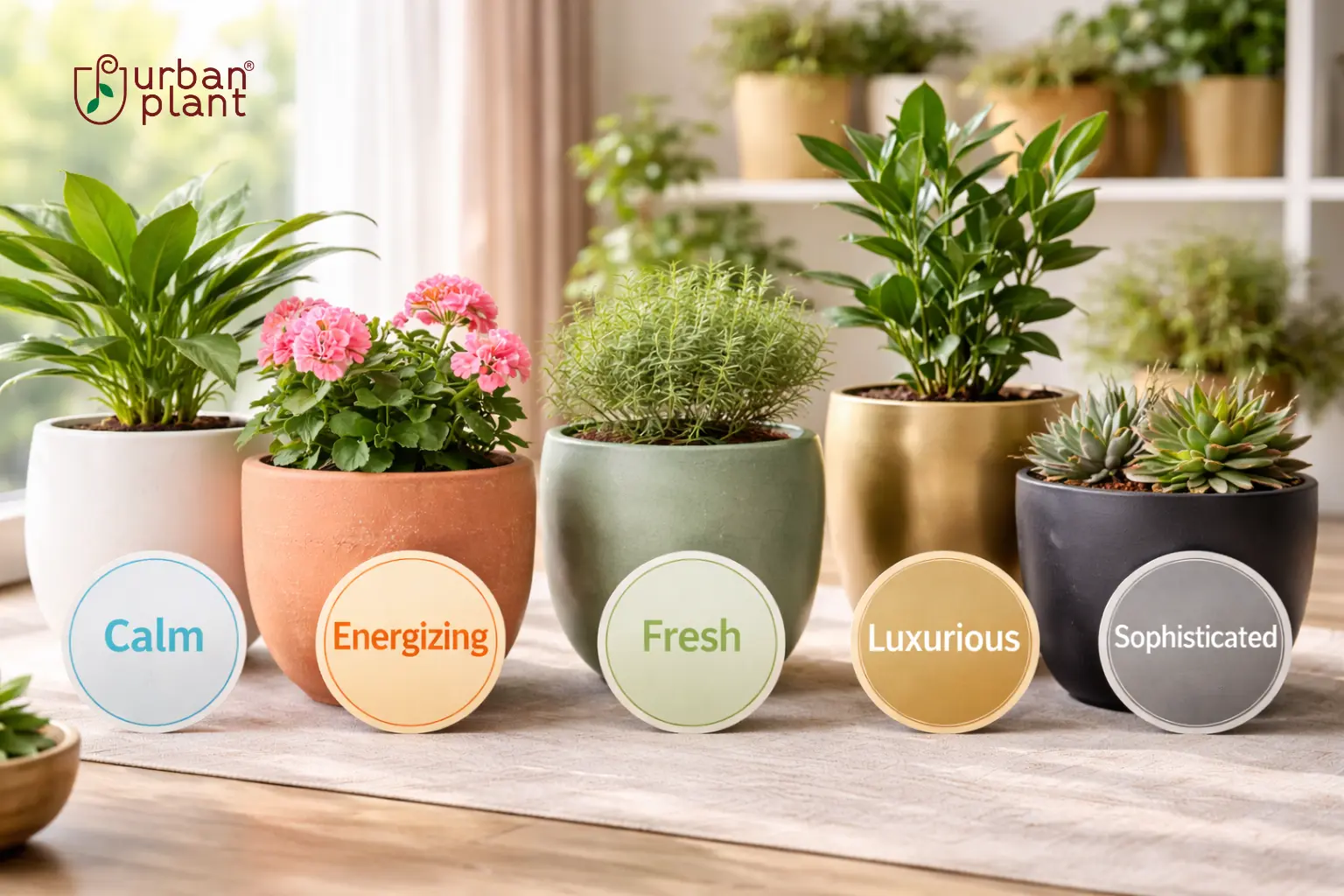
1. Warm vs. Cool Tones
Color psychology explores how hues affect human emotion. Studies show that warm colors like red and yellow evoke energy and vibrancy, while cool tones like blue and green have a calming effect.
Plants themselves have psychological benefits; lush greens promote relaxation and a connection to nature.
When choosing planter colors, think about the mood you want in each room:
- Energetic spaces – Use terracotta reds, sunny yellows, or deep orange pots to infuse warmth and invite activity in a kitchen or workout area.
- Calming corners – Opt for blues, greens,s or soft mint planters to create a tranquil reading nook or meditation space.
2. Cultural Influences
Colors carry cultural meanings. In Indian homes, gold and red are associated with prosperity and celebration, while green symbolizes harmony and growth.
Incorporating these shades into your planter palette can make your décor feel more connected to tradition.
3. Room Proportion & Balance (60–30–10 rule)
Interior designers recommend distributing colors in 60 % dominant color, 30 % secondary color, and 10 % accent color for visual balance.
Your planter acts as part of the accent color; choose a pot that contrasts gently with walls and furniture without overwhelming the space.
Read Also
Why Indian Gardeners Love Terracotta Pots: 10 Surprising Benefits
Save Your Plants: How to Repot Indoor Plants Without Damaging Roots
Matching Planter Colors to Interior Styles
1. Minimalist & Contemporary Spaces
- Neutrals – For sleek modern apartments with clean lines, choose white, grey, or natural terracotta pots. They keep the look refined and allow statement plants like snake plants or fiddle‑leaf figs to stand out.
- Matte finishes – Matte black or clay white planters add depth without adding shine.
2. Vibrant & Eclectic Interiors
- Bold contrasts – If your home features bright textiles or colorful walls, contrast them with mustard yellow, teal, or emerald green pots. Bodhi’s stylists suggest pairing a mustard planter beside a deep teal wall or emerald green against warm terracotta.
- Patterned pots – Choose planters with geometric or ethnic patterns to complement Indian art and craft pieces.
3. Traditional & Cultural Décor
- Metallic hues – Gold and copper planters echo Indian festivals and pair beautifully with wooden furniture. Orbelle Planters offers metal pots in gold and copper tones for a luxurious feel.
- Terracotta warmth – Terracotta’s earthy red works well with brass décor and woven textiles. The Terracotta Treasures set offers classic clay pots that balance tradition and durability.
4. Bohemian & Rustic Themes
- Earth tones – Browns, muted greens, and clay tones blend seamlessly with jute rugs and rustic wooden furniture. Earthy planters also allow foliage to be the focus. Earth Bowl Wooden Planters (Set of 2) have a warm wood finish perfect for boho corners.
- Eco‑friendly textures – Consider recycled, fiber, or bamboo planters. Rough, light‑colored surfaces reflect more sunlight and reduce heat stress.
Outdoor Planter Color Tips for the Indian Climate
1. Heat Management
- Summer (April–June) – Use light‑colored planters such as whites, creams, or pastel yellows. They reflect sunlight and lower soil temperature, keeping roots cool. White planters also help heat‑sensitive species like ferns or peace lilies reach maximum growth.
- Winter & Mild Seasons – Dark‑colored pots (brown, dark purple, black) absorb heat and can promote flowering in spring and autumn. Plants like geraniums, petunias, clivias, and cyclamens benefit from the extra warmth during cool nights.
- Extreme heat caution – Research shows black pots expose roots to temperatures above 38 °C far more often than white pots. Prolonged exposure above 35–38 °C can inhibit photosynthesis and slow growth.
2. Size & Visual Weight
Large planters in bold colors act as anchoring statements; smaller pots are great for experimenting with bright tones across shelves. Keep a consistent palette across different sizes to create cohesion.
3. Backdrop Matters
Your walls or fences affect how pot colors appear. Light planters stand out against dark walls, while dark planters create contrast against white walls. Neutral walls let metallic finishes like brass or copper shine.
Choosing Planter Colors by Plant Needs
Different plants have unique heat and light requirements. Use color to support their health:
| Plant type | Best planter color (why) | Example product |
|---|---|---|
| Heat‑sensitive indoor plants (ferns, peace lilies, philodendrons) |
Light colors (white, beige) reflect heat and keep the soil cooler | Metalix Metal Pot Set of 3 |
| Succulents & cacti | Light colors for summer; dark or earth tones in winter to support warmth and mimic desert soils | Orbelle Planters Set of 3 |
| Flowering annuals (geranium, petunia) |
Dark pots promote warmth in spring/autumn to encourage flowering | Terracotta Treasures set |
| Herbs & leafy greens | Earth tones or muted greens blend seamlessly and keep the focus on foliage | Earth Bowl Wooden Planters set |
Pro Styling Tips for Indian Urban Gardeners
.webp)
- Follow the 3‑color rule – Limit your planter palette to three complementary colors to avoid visual clutter. A neutral base (e.g., white), a secondary earth tone (e.g., terracotta), and a metallic accent (e.g., gold) work well in most Indian homes.
- Mix textures – Combine smooth ceramic pots with rough terracotta or woven baskets to add depth. Rough, light‑colored surfaces also reflect more sunlight and reduce root‑zone heat.
- Use stands & groupings – Elevate small planters with stands for height variation and group similar colors for a cohesive look. Urban Plant offers sleek metal stands and plant stands to mix and match.
- Consider lighting – In low‑light corners, choose glossy or metallic pots that reflect light and brighten the space. For sunny spots, matte, light‑colored pots prevent glare.
- Incorporate cultural accents – Tie your planter color scheme to local festivals. Use red or gold pots during Diwali, earthy browns and greens during monsoon, or pastel hues for Holi. Swap planter covers seasonally to refresh your space without re‑potting.
FAQs: Planter Color & Styling
How do I choose the right planter color for my home décor?
Choose planter colors based on your home’s décor theme, wall colors, and lighting. Neutral shades like white, beige, and grey suit modern Indian homes, while earthy terracotta and wood tones work best for traditional spaces. The right planter color should complement—not overpower—your interiors.
Which planter color is best for indoor plants in Indian homes?
For Indian indoor conditions, light-colored planters such as white, cream, and pastel shades are ideal. They reflect heat, keep roots cooler, and visually brighten compact apartments. These colors also pair well with most Indian interior styles, from minimal to ethnic décor.
Do planter colors affect plant health?
Yes, planter color can impact plant health, especially in Indian weather. Dark pots absorb more heat and can stress roots in summer, while light-colored planters reflect sunlight and maintain stable soil temperatures. This is particularly important for indoor and balcony plants in warm regions.
What are the best planter color ideas for Indian balconies?
For Indian balconies, use light neutrals like white, stone, or soft grey for heat control, combined with earthy terracotta or muted greens for warmth. This balance keeps plants healthy while creating a visually calm, clutter-free balcony garden suited to Indian climates.
How do I match the planter color with the wall color?
Follow contrast or harmony rules. For light walls, choose darker or earthier planters to create depth. For bold or dark walls, go with neutral or metallic planters. This styling approach is widely used by interior designers to create visually balanced indoor plant setups.
Conclusion & Next Steps
Choosing the perfect planter color is a blend of science, culture, and personal style. Consider your local climate, plant requirements, and home décor palette.
Use warm colors for energy, cool tones for calm, and metallics for festive flair.
Remember that light‑colored pots reflect heat, keeping roots cool, while dark pots absorb warmth and can encourage growth during cooler months.
With these insights, you can curate a beautiful, functional garden that reflects your personality.
Join our WhatsApp channel for daily inspiration. Let’s grow together and make every Indian home a greener, happier place.


