
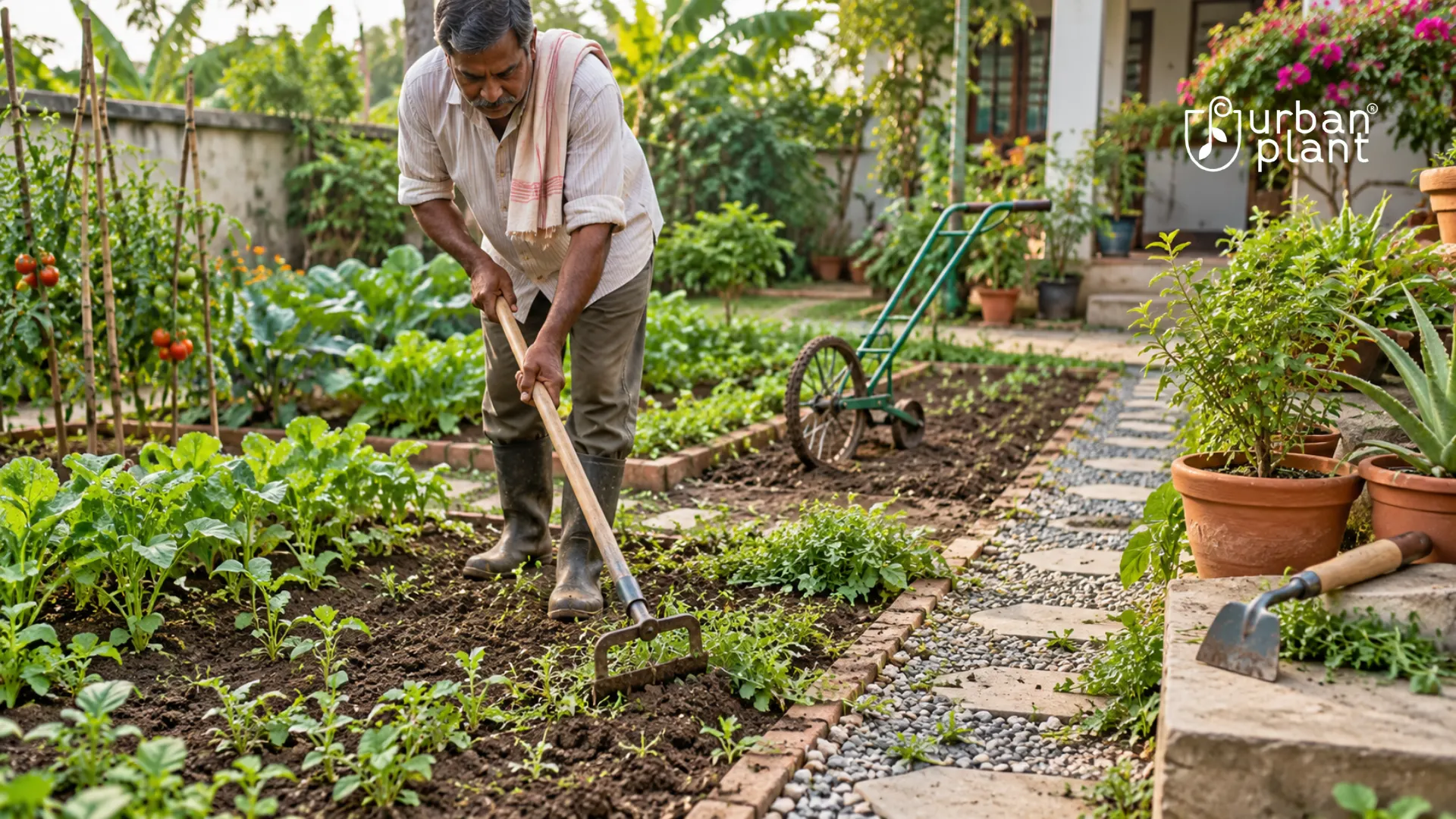
Weed removal tools can save you from repeatedly bending down and pulling unwanted plants by hand. For larger, open spaces, a wheel hoe or stirrup hoe cuts young weeds near the soil surface. For pots, crowded garden beds, and awkward corners, a khurpi offers better control. The right choice depends on where the weeds grow and how firmly they are rooted.
From kitchen gardens in Lucknow to monsoon-soaked paths in Mumbai, weeds can return quickly. The answer is often a simple tool used before they become established.
Why Do Weeds Keep Coming Back?
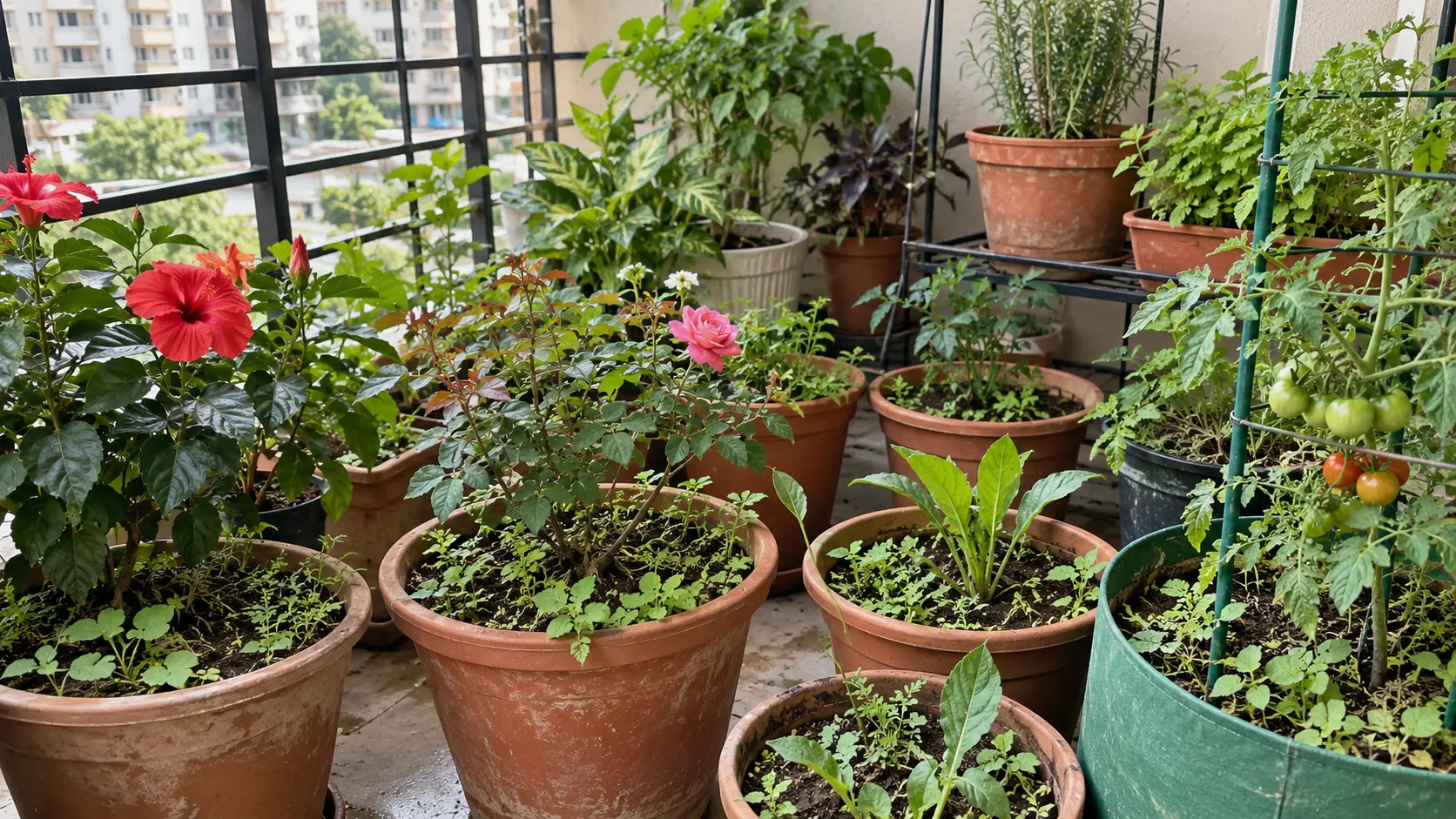
Weeds compete with your vegetables and ornamental plants for sunlight, moisture, and nutrients.
They can arrive through wind-blown seeds, bird droppings, fresh soil, or old potting mix. Monsoon moisture can encourage new weed growth soon after clearing.
Cutting a young annual weed below the surface often stops it. But nutgrass and other persistent weeds may regrow from underground parts.
Remove their roots or underground stems wherever practical rather than just cutting leaves.
You May Also Like This
When to Stop and Start Fertilizing Plants: The Growth Rule for Indian Gardens
15 Clever Trellis Ideas to Maximise Small Garden Space [Photos + DIY Tips]
3 Weed Removal Tools Worth Knowing About
1. Wheel Hoe Weeder: Best for Long Rows and Open Gravel Paths
A wheel hoe is a long-handled, push-operated frame with a wheel and a working blade. On open ground, you walk behind it and guide the attachment between crop rows.
It reduces repeated bending, making it more practical for a larger kitchen garden than working every metre with a hand tool.
For small weeds in some loose-gravel paths or driveways, a flat undercutting attachment can slice growth near the surface.
First test a short section: the blade may disturb stones, snag hidden landscape fabric or fail on tightly compacted gravel. A wheel hoe is not suitable for tiled terraces, paved joints or areas packed with plant roots.
How to use it:
- Check that the blade is intended for weeding, not deep cultivation.
- Choose a clear strip with enough room to steer safely.
- Make controlled passes through young growth, avoiding buried irrigation pipes and crop roots.
- Collect uprooted weeds and level displaced gravel afterwards.
This is a surface-cutting method, not complete root extraction.
This is a surface-cutting method, not complete root extraction. Tamil Nadu Agricultural University documents long-handled wheel hoes for dry-land crop rows; suitability for gravel depends on the surface.
2. Stirrup Hoe: Best for Young Weeds in Garden Beds
Also called an oscillating hoe, a stirrup hoe is a type of push-pull weeder with a loop-shaped blade that moves slightly as you push and pull. The blade slices through newly emerging weeds just below the soil surface without turning over the whole bed.
It suits spaced vegetable rows, flower-bed edges and exposed soil. It has no wheel to manoeuvre but still needs room for the blade.
Use short, shallow strokes while the soil is workable but not waterlogged. Keep the blade away from vegetable stems, shallow feeding roots and newly transplanted seedlings. On a dry day, cut seedlings are less likely to settle back into moist soil; in humid monsoon weather, gather the cut weeds instead of leaving them on the bed.
A stirrup hoe is a preventive maintenance tool. It is not the right choice for removing mature weeds with thick taproots or underground runners. Nor should you scrape it across tiles, waterproofed terrace flooring, or closely fitted paving stones.
3. Khurpi: Best for Pots, Tight Corners and Stubborn Roots
For many Indian homes, the most useful weed-removal tool is the familiar khurpi, or khurpa. Its short handle and flat blade let you work around plant stems, pot rims and narrow sections of a raised bed. It requires more bending than a long-handled tool but offers much better precision.
A khurpi helps loosen a small patch of potting mix so you can lift a weed with more of its root attached. It is particularly useful when unwanted growth appears beside tulsi, chilli, rose, or money plant roots, where a broad hoe would risk damage.
How to use it safely:
- Check that the soil is slightly moist, not sticky or saturated.
- Insert the blade beside the weed rather than directly against the main plant.
- Gently loosen the surrounding mix and lift out the weed and visible roots.
- Press the potting mix back around the desired plant without burying its stem.
Urban Plant lists a Gardening Khurpa for digging and loosening soil. Its Flat Hand Weeder is another compact option for precision work in flower and vegetable beds. Neither replaces a long-handled hoe for large areas.
Which Gardening Tool Should You Choose?
| Your Weeding Area | Most Practical Choice | Important Limitation |
|---|---|---|
| Open kitchen-garden rows | Wheel hoe | Needs clear space and suitable soil |
| Young weeds across a soil bed | Stirrup hoe | Less effective on established perennial roots |
| Balcony pots and raised planters | Khurpi | Requires close, careful work |
| Loose gravel garden path | Wheel hoe with correct blade | Test first; can shift stones or damage liners |
| Weeds between paving stones | Narrow hand weeder or careful hand removal | Avoid damaging grout or the paving base |
Choose by area, not just handle length or blade size. A compact tool may serve a balcony better than a large implement. Explore Urban Plant's gardening tools collection.
How to Remove Weeds Without Chemicals—and Slow Their Return
Combine timely removal with prevention. Start when weeds are small. Inspect after rain, but avoid hoeing sticky mud. Work during cooler hours in North India's summer.
After removing weeds, follow these steps:
- Clear the remains: Collect cut or uprooted weeds, especially those with seed heads, creeping stems, or underground bulbs. Do not leave persistent weeds on moist soil, where some can re-establish.
- Cover bare soil: Apply an appropriate layer of clean organic mulch around established plants, leaving space around the stems. Mulch blocks some light from reaching germinating weeds and helps moderate soil moisture.
- Keep paths tidy: Remove accumulated soil and leaf litter from paving joints; these materials give new weed seeds a place to germinate.
- Check again regularly: A short weekly inspection is easier than a large clean-up after several weeks of monsoon growth.
Avoid pouring salt, boiling water or concentrated vinegar around garden plants. Such treatments may injure desirable roots, affect soil conditions or damage surrounding surfaces. Chemical-free weeding still requires care: sharp tools, hidden drip lines and terrace waterproofing deserve attention.
Common Weed-Removal Mistakes to Avoid
Do not dig deeply around shallow-rooted vegetables, use a wide blade beside delicate seedlings, or assume every weed dies after one cut. If a plant keeps reappearing from the same place, investigate its underground roots.
For unknown irritating weeds, wear gloves and avoid direct skin contact. Particular caution is advised when handling Parthenium, or congress grass.
Frequently Asked Questions
What is the best weed removal tool for an Indian home garden?
For pots and raised beds, choose a khurpi or narrow hand weeder. A wheel hoe suits long vegetable rows; a stirrup hoe suits shallow weeding in open soil.
How can I remove weeds without pulling them by hand?
Slice young weeds below the surface using a stirrup hoe or wheel hoe. Clear-cut growth and inspect for regrowth. Deep-rooted weeds may still need digging.
Can a wheel hoe remove weeds from a gravel driveway?
Sometimes, on loose gravel with small weeds. Test a shallow blade first. Avoid areas with weed-control fabric, pipes, or vulnerable paving beneath the stones. Deep roots may remain.
How do I remove weeds between paving stones?
Use a narrow weeder or joint-cleaning tool. Remove accessible roots and sweep away trapped soil. Avoid scraping grout or damaging terrace waterproofing.
Is monsoon season a good time for weeding?
Yes. Weeds are visible, and slightly moist soil helps root removal. Avoid saturated ground, collect cut weeds promptly, and check beds often during rainy weeks.
Conclusion
The best weed removal tools are not necessarily the biggest or most expensive. A wheel hoe helps in open rows, a stirrup hoe handles young weeds across beds, and a khurpi makes delicate work easier around pots and established plants.
Check the surface, root type, and nearby plants before choosing your method; no single tool will solve every weed problem permanently.
For more realistic gardening advice suited to Indian homes, follow Urban Plant on Instagram. Stay connected for practical plant-care ideas, seasonal reminders, and helpful garden updates.


