

The ZZ plant is one of the easiest indoor houseplants for beginners. It thrives in low‑to‑medium light, stores water in its rhizomes, and prefers to dry out between waterings. Use a well‑drained potting mix, avoid direct sunlight, and water every two to three weeks or when the soil is dry.
Why ZZ plants capture urban Indian hearts
Imagine a plant that tolerates forgetful watering, thrives in your dimly lit apartment, and still rewards you with glossy, sculptural foliage. That’s the charm of the ZZ plant (Zamioculcas zamiifolia).
Many new plant parents in India buy a ZZ thinking it’s indestructible, only to watch the leaves yellow or wrinkle.
The underlying problem isn’t the plant—it’s misunderstandings about watering, light, and our unique climate.
In this guide, I’ll show you how to master ZZ plant care so your “eternity plant” truly lives up to its name.
1. Choosing the right spot: light and placement
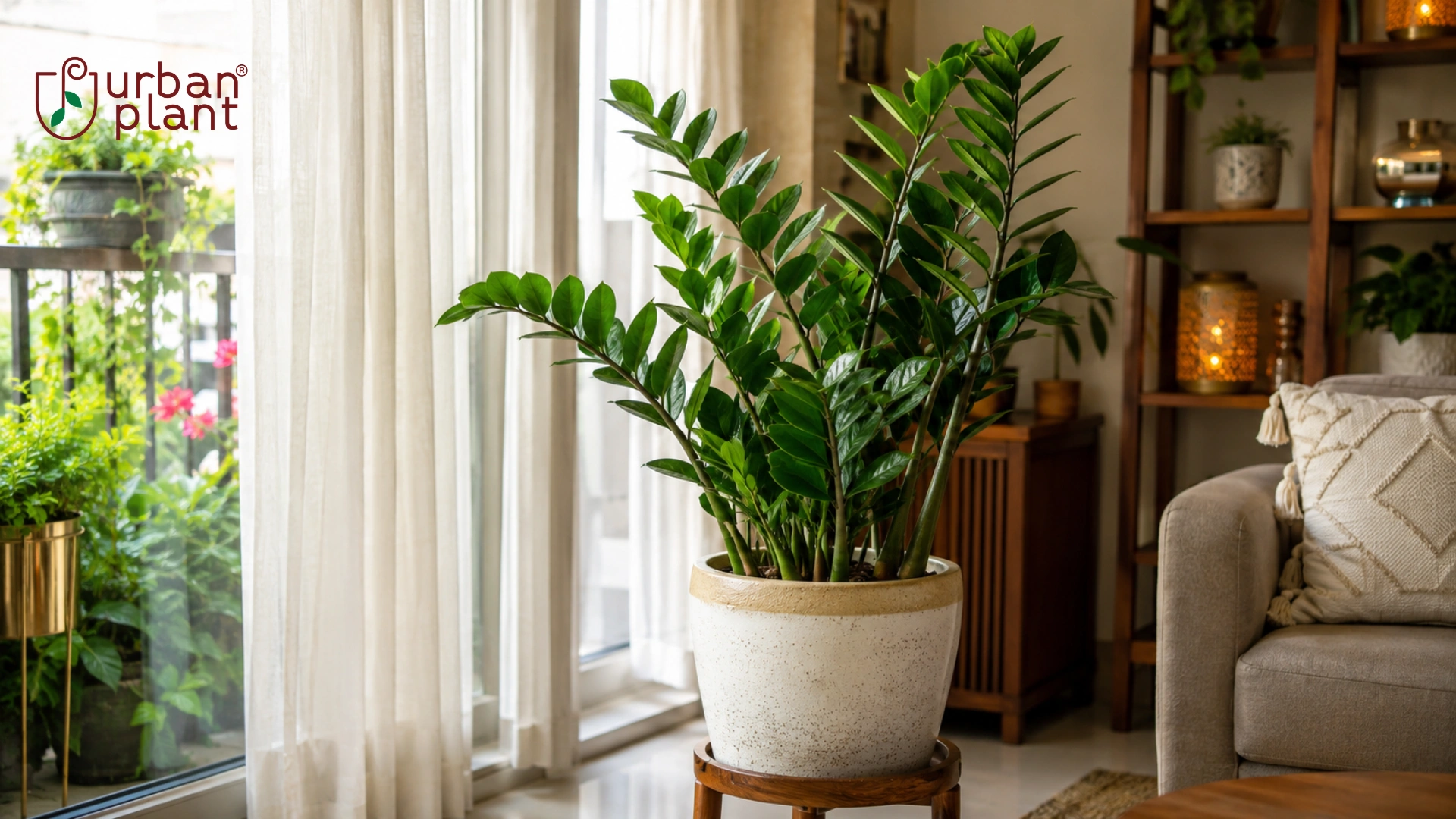
Light requirements
A ZZ plant’s placement directly affects its growth rate and leaf colour. Here’s how to get it right:
- Bright, indirect light is ideal: Place your plant near an east‑ or north‑facing window where it receives filtered sunlight.
- Tolerates low light: The plant will survive in dim corners or offices with fluorescent lights.
- Avoid harsh sun: Direct afternoon sunlight (common on south‑ and west‑facing balconies) can scorch the waxy leaves and cause browning.
- Rotate regularly: Rotate the pot every few weeks to promote even growth and prevent the plant from leaning towards the light source.
Placement tips for Indian homes
Indian cities experience extreme seasonal variations. Position your ZZ plant with the following in mind:
- Summer: Keep it away from hot windows or metal grills that amplify heat. If the temperature exceeds 35 °C, move it slightly away from the window and mist the air around it for cooling.
- Monsoon: Increased humidity is generally good, but ensure the pot isn’t exposed to rain. Excess water from balconies can seep into pots and cause root rot.
- Winter: Light levels drop, so move the plant to brighter spots. Indoor heaters or room heaters can dry the soil faster; check the moisture before watering.
2. Watering: less is more
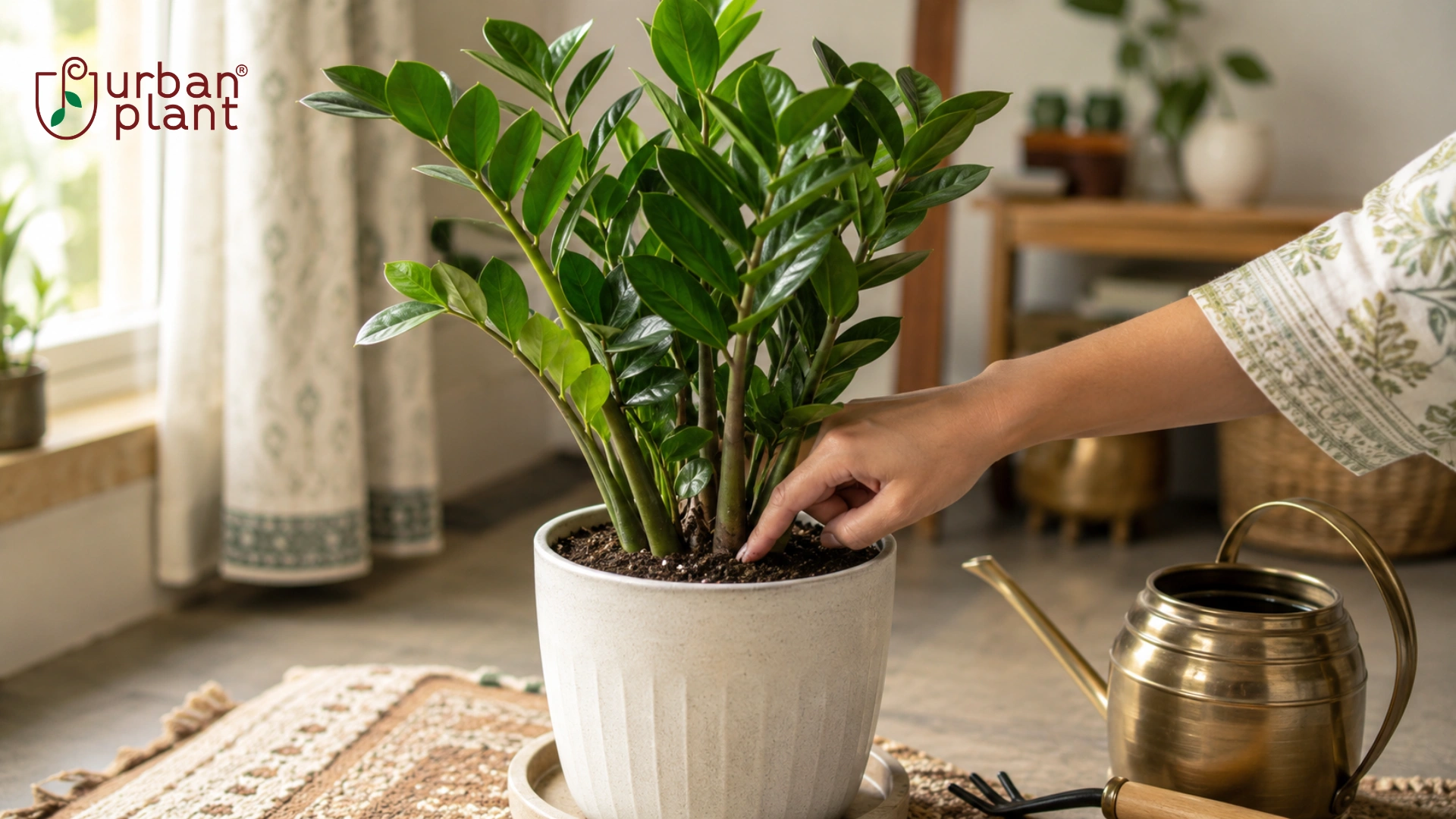
Watering is the most misunderstood aspect of ZZ plant care. Because its rhizomes store water, this plant thrives on deep but infrequent watering. Overwatering suffocates roots and invites rot.
How and when to water
- Check the soil: Insert your finger into the top 2–3 cm of soil. Water only when this layer feels completely dry.
- Water thoroughly: When it’s time, water until liquid runs out of the drainage holes. Discard any excess water collected in the saucer.
- Let it dry: Allow the soil to dry fully before watering again. In most Indian apartments, this means every two to three weeks in spring and summer and once a month in winter.
- Adjust for climate: During peak summer in India, the soil dries faster. Monitor your plant weekly, but resist the urge to water too often. In the monsoon season, indoor humidity rises; extend the watering interval and ensure proper ventilation.
3. Soil, potting, and repotting
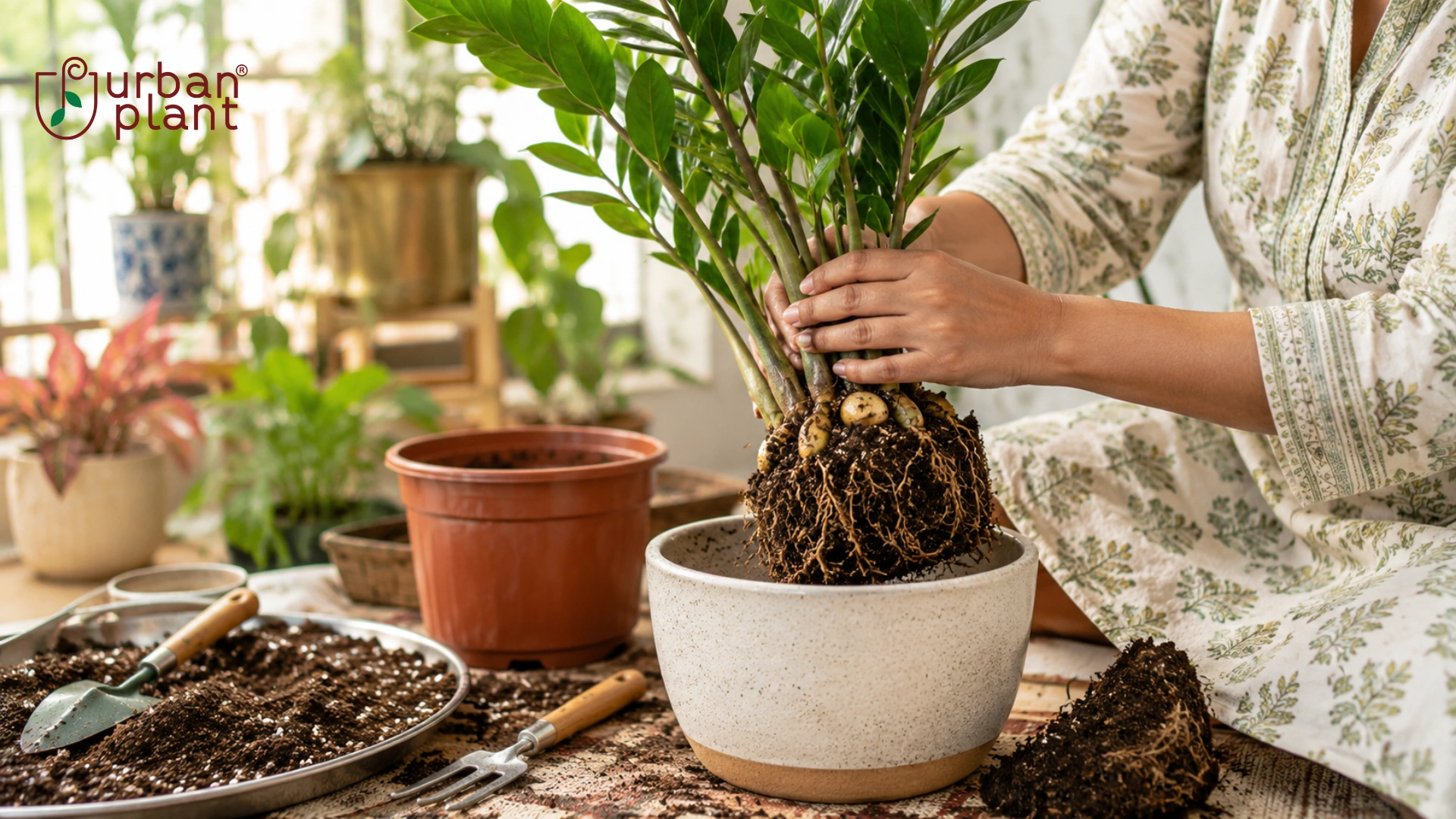
A healthy ZZ plant begins with the right medium and container.
- Choose well‑drained soil: A loose potting mix combined with perlite or sand prevents waterlogging.
- Use pots with drainage holes: Standing water is fatal; always use containers with proper drainage.
- Repot infrequently: ZZ plants grow slowly and typically need repotting only when rhizomes crowd the pot or roots emerge from the drainage holes. This could be every 2–3 years.
- Best time to repot: Spring is ideal. Choose a pot 2–3 cm wider than the current one and fill it with fresh mix. Gently divide rhizomes if you want multiple plants.
Read Also
7 Proven Hacks: Snake Plant Care Guide for Indian Homes
Easy & Effective Plant Propagation Techniques That Actually Work in India
4. Fertilization and feeding
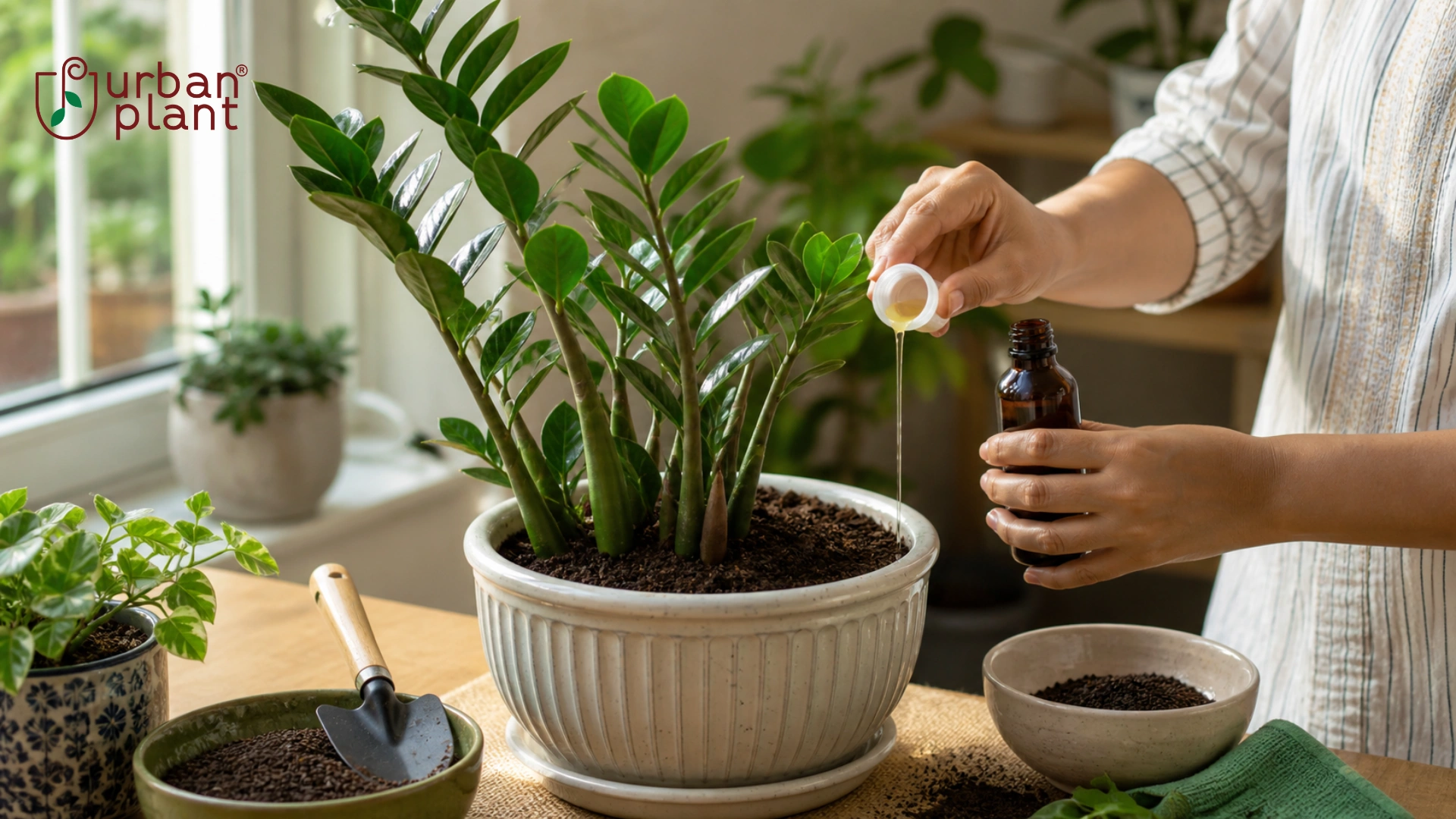
Unlike hungry tropical plants, the ZZ thrives in nutrient‑poor soils. However, occasional feeding boosts growth:
- Minimal fertiliser required: Experts say that ZZ plants generally do not need fertiliser. If you choose to feed, use a balanced, water‑soluble houseplant fertilizer diluted to half strength every two to three months during the growing season.
- Avoid winter feeding: The plant rests in the cooler months; fertilizing then may cause salt build‑up and root damage.
- Organic options: For Indian gardeners, liquid seaweed or cow-manure-based tonics provide gentle nutrients without overwhelming the plant. Urban Plant’s organic liquid fertilizer is ideal for occasional feeding.
5. Pruning, propagation, and growth
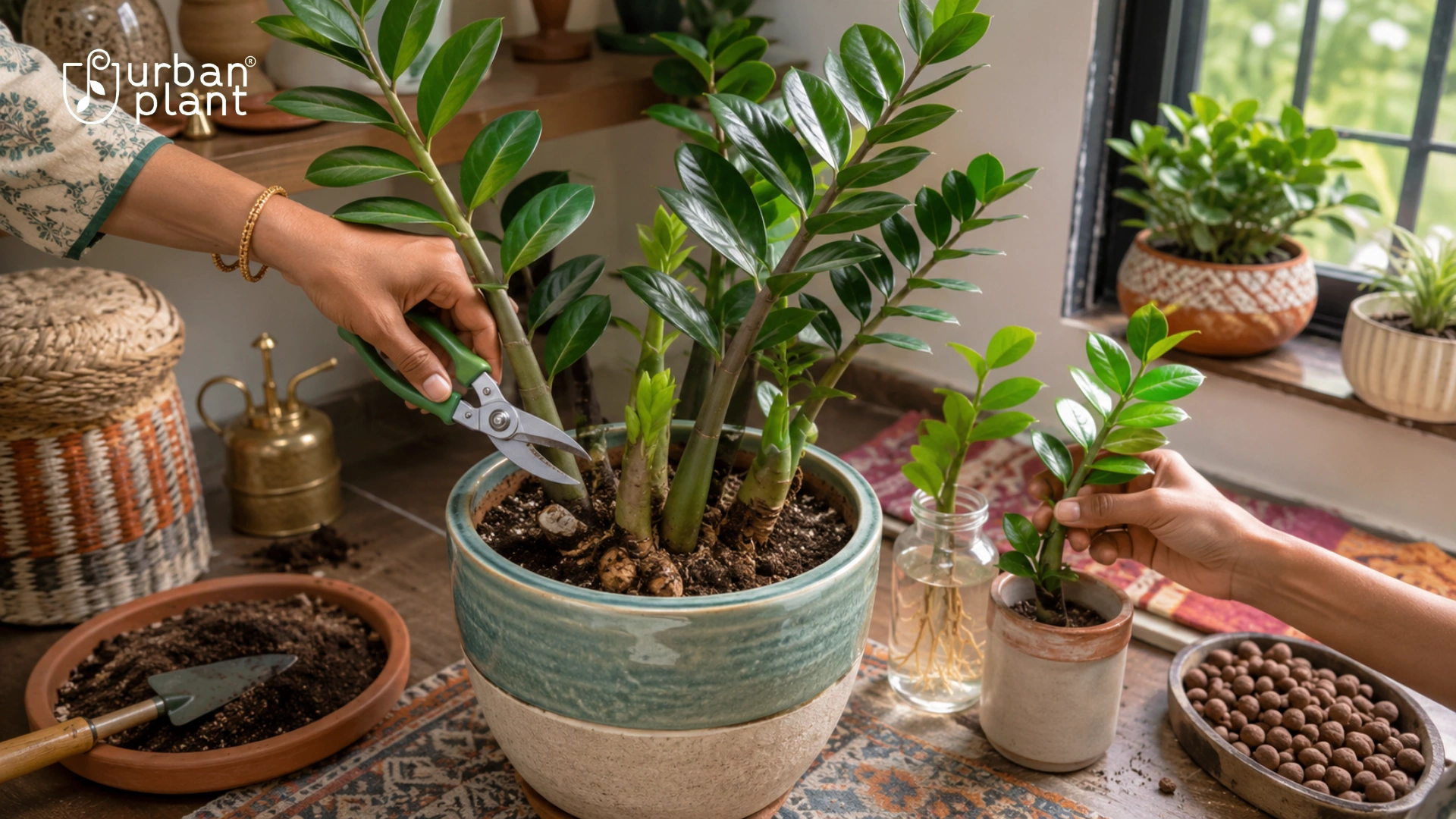
- Pruning is minimal: Trim yellow or damaged leaves with clean scissors to maintain appearance. The plant rarely needs shaping.
- Propagation by division: During repotting, separate rhizomes into smaller clumps and pot them individually. This method yields established plants faster than leaf cuttings.
- Propagation by leaf cuttings: Cut a healthy leaf, including its petiole, and insert the cut end into moist potting mix. It may take several months for a new rhizome to form.
- Growth pattern: ZZ plants grow slowly and often in spurts. Don’t be alarmed if your plant seems static for months.
6. Dealing with pests and common problems
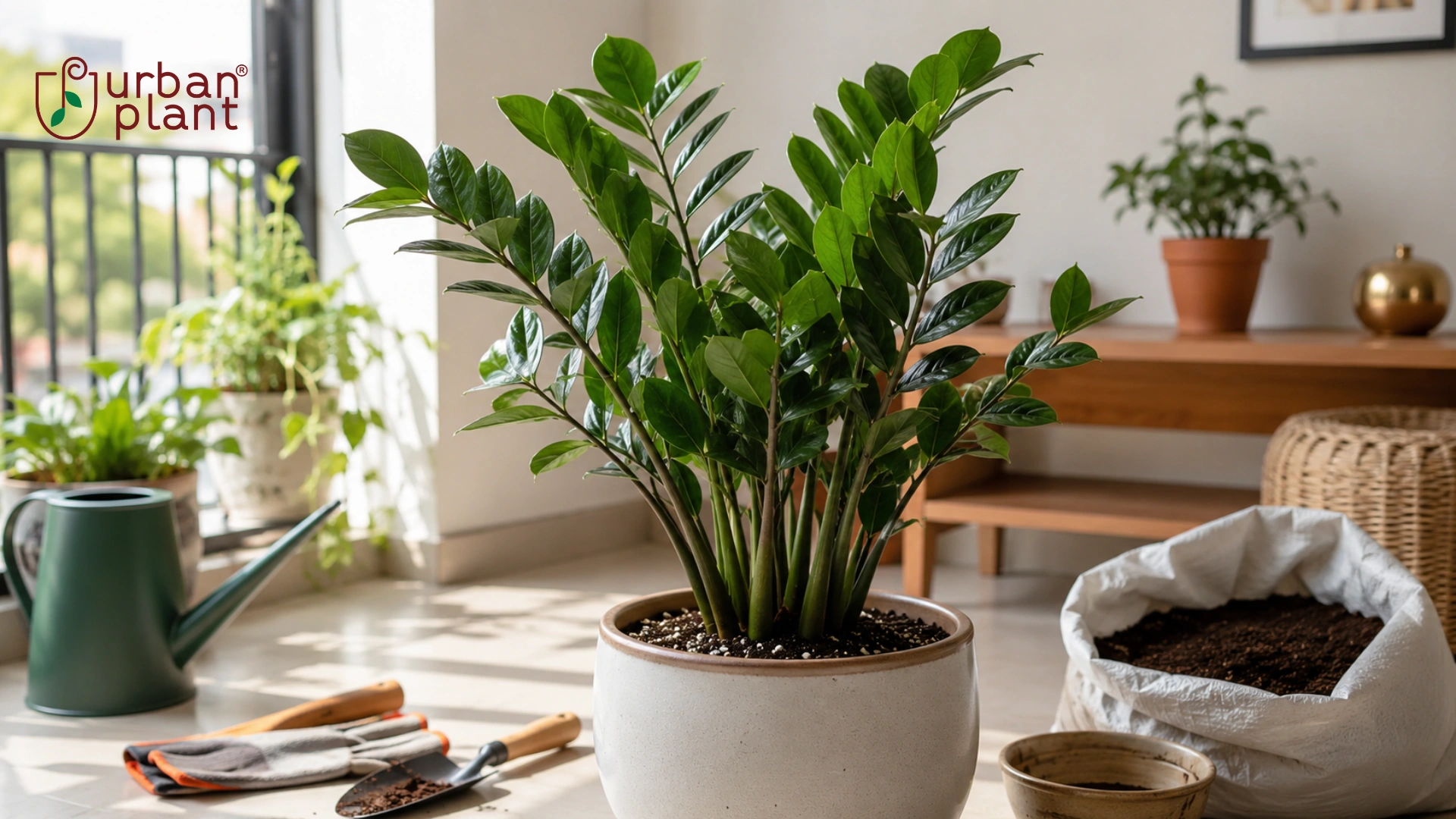
ZZ plants are generally pest‑free, but watch for mealybugs, scale, and spider mites. These appear as white cottony masses or tiny brown bumps on stems and leaves.
- Treat early: Wipe affected areas with a cotton swab dipped in rubbing alcohol or apply neem oil spray. Repeat weekly until pests are gone.
- Root rot: The most common problem arises from overwatering. If the soil smells sour and rhizomes look mushy, cut away affected parts, repot in fresh dry mix and water sparingly.
- Sunburn: Brown or yellow patches on leaves indicate sun scorching. Relocate the plant away from direct sunlight.
7. ZZ Plant care in the Indian climate
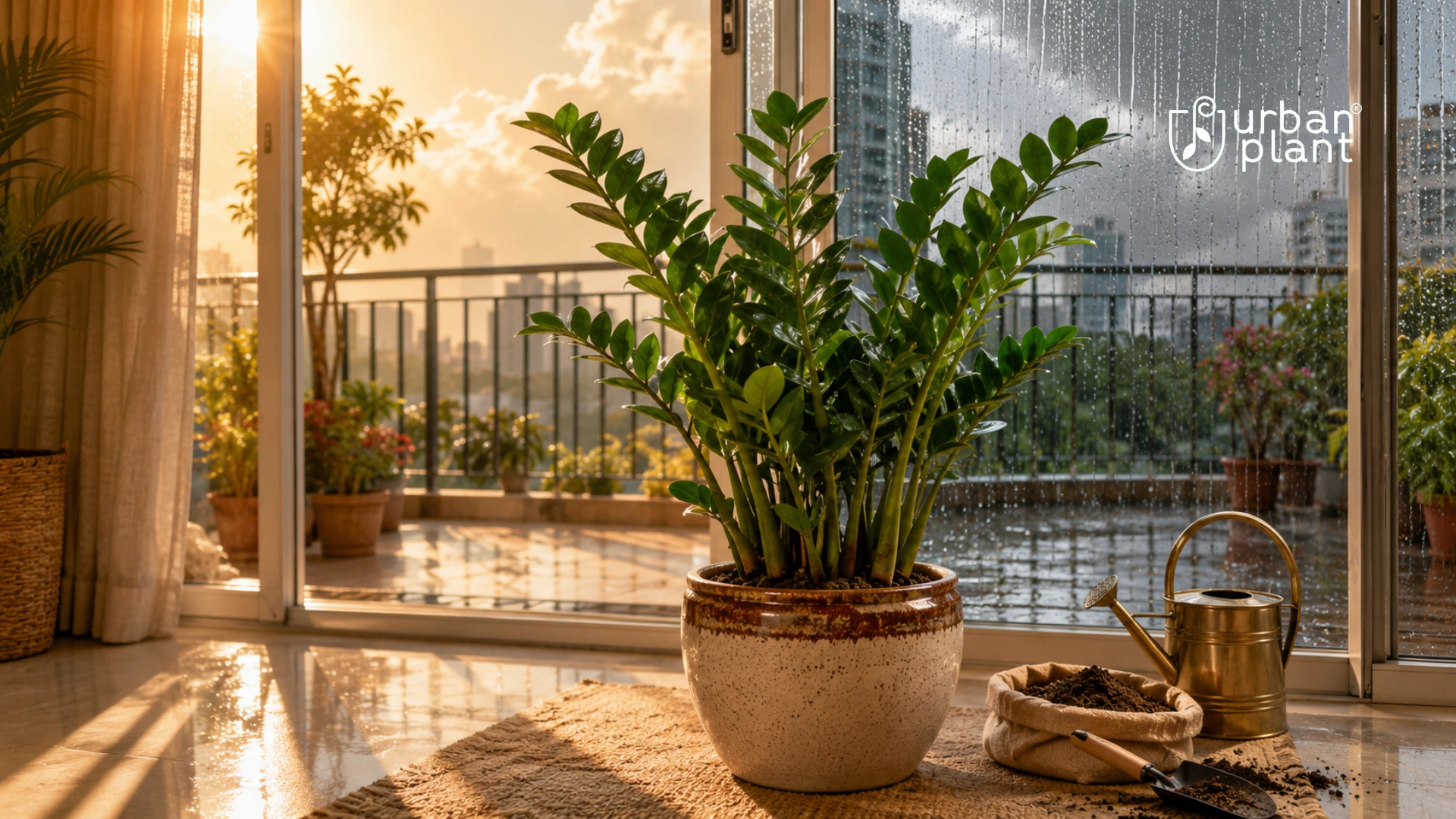
Coping with summer heat
India’s summers can exceed 40 °C in many regions. High heat increases evapotranspiration, causing soil to dry faster. Follow these tips:
- Shield from harsh sun: Move your plant to a shaded corner during midday to prevent leaf burn.
- Check moisture more often, not water more: The top layer may dry quickly, but the rhizomes often still hold water. Always check the deeper soil before watering.
- Increase humidity: Place the pot on a pebble tray filled with water or group plants together to raise humidity without overwatering.
Navigating the monsoon
During the monsoon, high humidity reduces evaporation and increases the risk of fungal diseases:
- Ventilate your space: Ensure good air circulation to prevent stagnant moisture around leaves.
- Delay watering: With ambient humidity, extend the interval between waterings. Wait until the soil is fully dry.
- Watch for pests: Mealybugs thrive in humid conditions, so inspect your plant regularly and treat at the first sign.
Winter adjustments
Northern India’s winters can be cool, while southern regions remain mild. The plant’s growth slows:
- Place near windows: Provide as much natural light as possible during shorter days.
- Reduce watering frequency: Once every three to four weeks is sufficient. Always allow soil to dry.
- Avoid cold drafts: Keep the plant away from cold, windy balconies at night.
Explore these options in the plant care and pots & planters sections of Urban Plant’s online store to support your ZZ plant’s health.
FAQs
How often should I water a ZZ plant?
Water only when the top 2–3 cm of soil is dry. In most Indian homes, this translates to every two to three weeks in the growing season and once a month in winter. Always water thoroughly and discard excess water.
Can ZZ plants grow in low light?
Yes. They tolerate very low light and even fluorescent office lighting, but they thrive and grow faster in bright, indirect light. Avoid direct sun, which can burn the leaves.
Why are my ZZ plant’s leaves turning yellow?
Yellowing or mushy leaves usually indicate overwatering. Let the soil dry completely before watering again, and ensure your pot has drainage holes.
Is the ZZ plant safe for pets?
No. The plant is slightly toxic to pets and humans if ingested. Keep it out of reach and wash your hands after handling the sap.
How do I propagate a ZZ plant?
Divide the rhizomes during repotting or take leaf cuttings. Insert a leaf with its petiole into moist potting mix and wait several months for a new rhizome to form
Conclusion
Growing a ZZ plant in India is refreshingly simple when you respect its nature. Provide bright, indirect light, water sparingly and use a well‑drained medium. Adjust your care routine through India’s intense summers, humid monsoons and mild winters, and your plant will reward you with glossy, architectural foliage for decades.
For more gardening guides and expert tips, join our WhatsApp community today.


